Start with three arrangements: the drape, the once-around and the Parisian loop. Learn the movement of the fabric, then choose the method that works with your scarf and coat. You do not need a collection of complicated knots to use a scarf well.
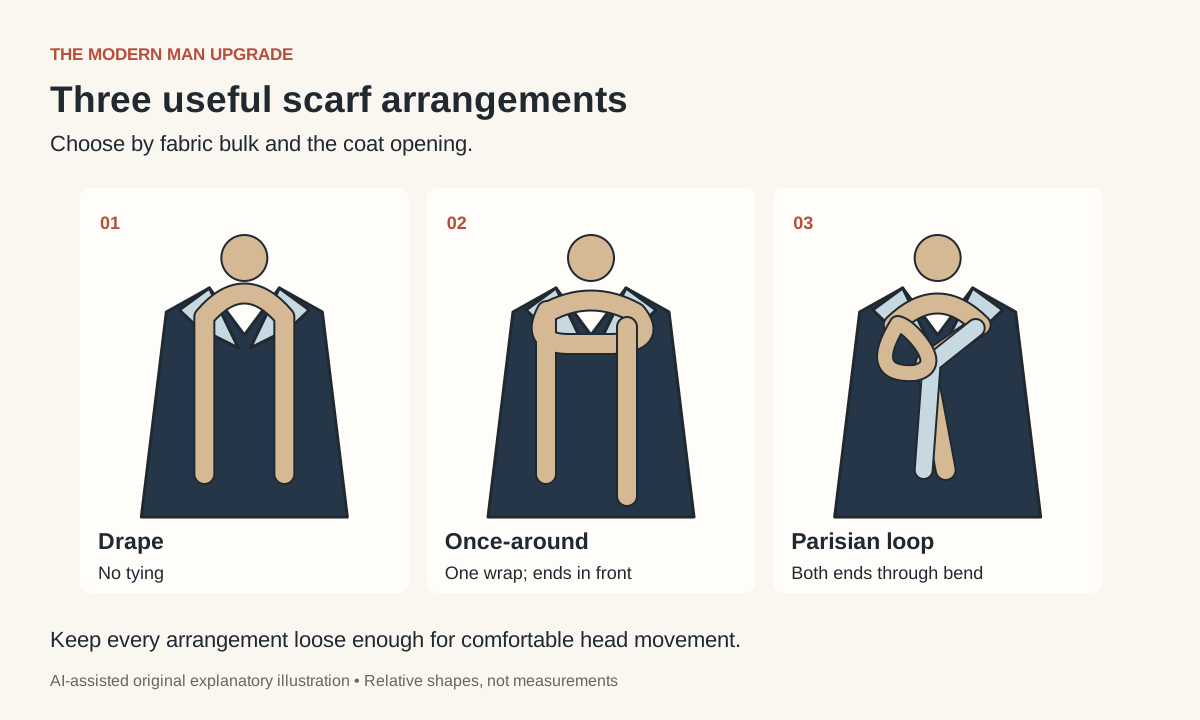
For a loose decorative arrangement, drape both ends in front. For a simple wrap, start with one end longer and take it once around the neck. For a Parisian loop, fold the scarf in half, put it around your neck and pass both free ends through the folded loop. Adjust loosely and check with your coat fastened.
Choose a method for the scarf you actually have
Lay the scarf out before putting it on. Notice its length, width and thickness, and whether the fabric bends into a compact fold. A bulky knit takes up more space at a coat collar than a thinner woven scarf. If folding it produces a large bundle, try an arrangement with fewer overlapping layers.
The following steps are basic tying mechanics demonstrated in the Art of Manliness scarf tutorial and the original Real Men Real Style demonstrations. Your fabric and coat determine the result. There is no single scarf length or weather threshold that makes a method right for everyone.
Method one: the drape
- Place the center of the scarf behind your neck.
- Bring both ends to the front and let them hang.
- Adjust the ends until they sit at a length you like.
- Settle them inside or outside the coat opening as intended.
There is no knot. Try this when you want a simple vertical accent and do not need the scarf held closely around the neck. A navy coat with a grey scarf is an easy editorial example: keep the two ends flat, then check that they do not interfere with the buttons or zipper.
Because the drape remains loose, assess how it behaves while walking and turning. If it repeatedly slips or leaves the coverage you wanted exposed, use the once-around or loop. Do not solve slipping by trapping a thick scarf awkwardly beneath a fastener.
Method two: the once-around
- Hang the scarf around your neck with one end longer.
- Take the longer end around the back of your neck once.
- Bring that end forward again.
- Adjust the wrap and the hanging ends without pulling tightly.
No extra knot is necessary. The ends can be uneven if that is comfortable and deliberate. Start with a loose wrap; you should be able to turn your head and settle the coat collar without constantly rearranging the scarf.
A practical example is a plain scarf with an open casual jacket. Put on the jacket first, make the wrap, then decide whether the ends belong inside the opening. If the scarf is too short to leave usable ends, choose the drape instead of forcing another turn. If a wide scarf feels bulky, fold its width gently only if the resulting strip remains comfortable.
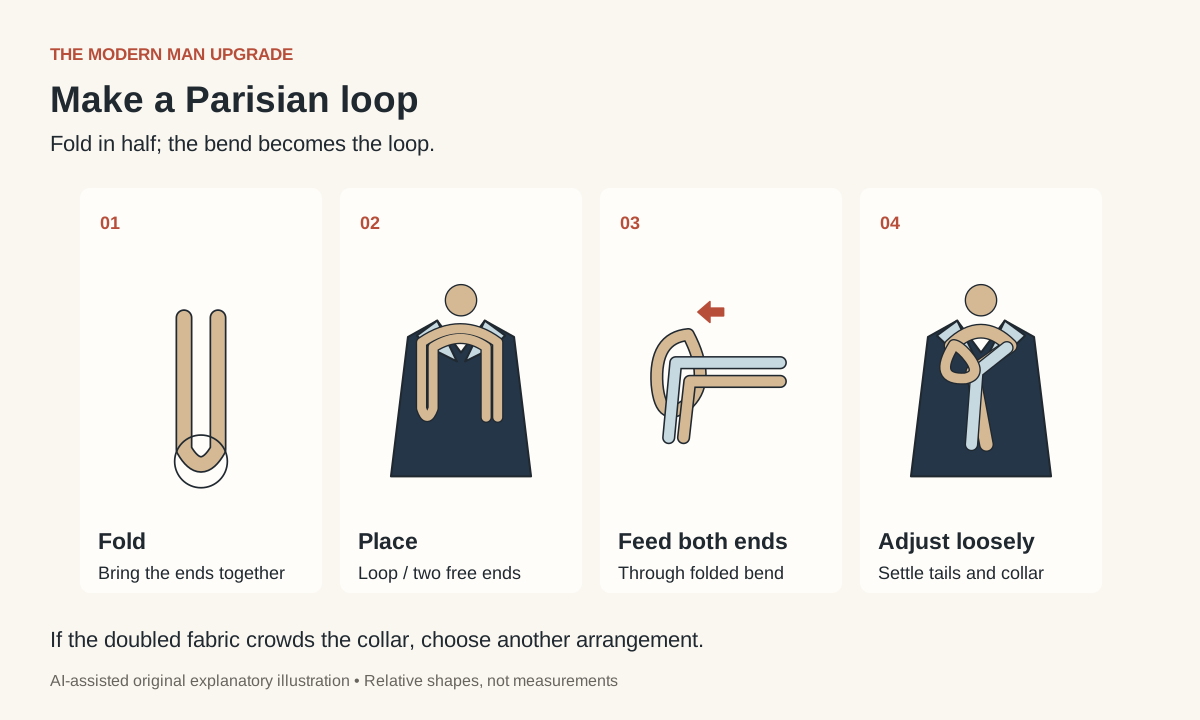
Method three: the Parisian loop
- Fold the scarf in half so the two free ends meet.
- Place the folded scarf around your neck, with the folded bend on one side and both ends on the other.
- Pass both free ends through that bend.
- Draw them through gently, then adjust the loop and tails.
This creates a compact arrangement at the front. The doubled fabric can become bulky, particularly when the scarf is thick. If the loop fills the whole coat opening or puts pressure on your neck, loosen it or switch methods. A neat result should not require a tight pull.
Finish with the coat you will wear outside
Try the complete combination, including any sweater and the normal coat closure. A scarf that looks balanced over a tee may compete with a substantial knit collar. Make the following checks in front of a mirror, then move normally:
- Can you turn your head comfortably in both directions?
- Does the coat fasten without pulling the scarf into a hard lump?
- Do the ends stay clear of pockets and the fastening?
- Does the arrangement remain usable after walking a few steps?
If you regularly enter a heated office or train, practice removing and storing the scarf as well. An easy arrangement may be more useful than an elaborate one that you dislike undoing. Use the layering guide to plan the rest of the outfit around changing indoor and outdoor conditions.
Coordinate color without buying another scarf
Begin with the coat, sweater and scarf already available. If the coat has a strong pattern, compare a simpler scarf; if both pieces are patterned, check whether the combination looks busier than you want. These are visual preferences, not dress-code laws. Photograph two options in the same lighting if you find them hard to compare.
A brown coat, navy sweater and cream scarf offer one restrained example. Another is a charcoal coat with a single checked scarf as the accent. The color guide explains how to repeat a small color rather than add several competing accents.
Fix common scarf problems
The loop looks enormous: try fewer folds, a once-around, or a thinner scarf that you already own. Do not compress a large knot against your throat merely to make it smaller.
The ends disappear: the scarf may not have enough usable length for the chosen method. Return to a drape or test the wrap without doubling it. A different arrangement is often the solution.
The collar looks crowded: test the scarf under and over the coat opening, then check the closure again. A tall sweater collar and a bulky scarf may compete for the same space.
The scarf keeps slipping: reset the starting lengths and test the once-around or loop. Smooth fabric behaves differently from a textured knit; there is no need to force identical results.
Scarf questions
Must the ends be perfectly equal?
No. Aim for an arrangement that looks intentional and stays comfortable. Equal tails are an option, not a requirement.
Is the Parisian loop always warmest?
No. Fabric, coverage, conditions and the rest of your clothing matter. Choose clothing appropriate to the actual weather rather than judging by a knot name.
Can a short scarf work?
Yes. A drape may be easier than a doubled loop. Try the available length before buying a replacement.
If your winter outfit needs more than a scarf adjustment, use the free Top 3 filter to prioritize the changes that affect everyday use most.