Use a clothes steamer only after checking both the garment and the appliance instructions. The aim here is to relax suitable wrinkles on a supported garment. Cleaning soil, creating a sharp pressed crease and restoring tailored structure are different tasks.
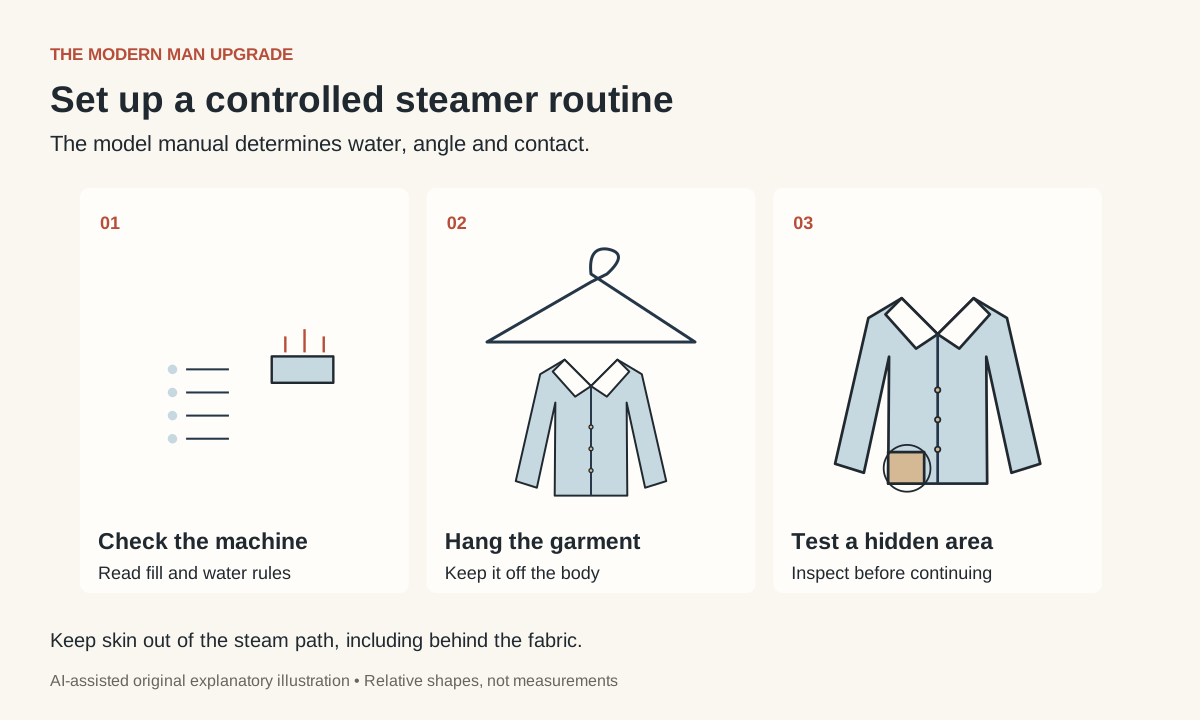
Confirm that steam suits the fabric and trims, use the water and operating position specified by your model, and hang the garment on a stable support. Test an inconspicuous area, then work in small moving sections with the permitted contact or distance. Keep the garment off the body, let it dry before wearing or storing, and stop if the finish changes.
Decide whether steaming is the right job
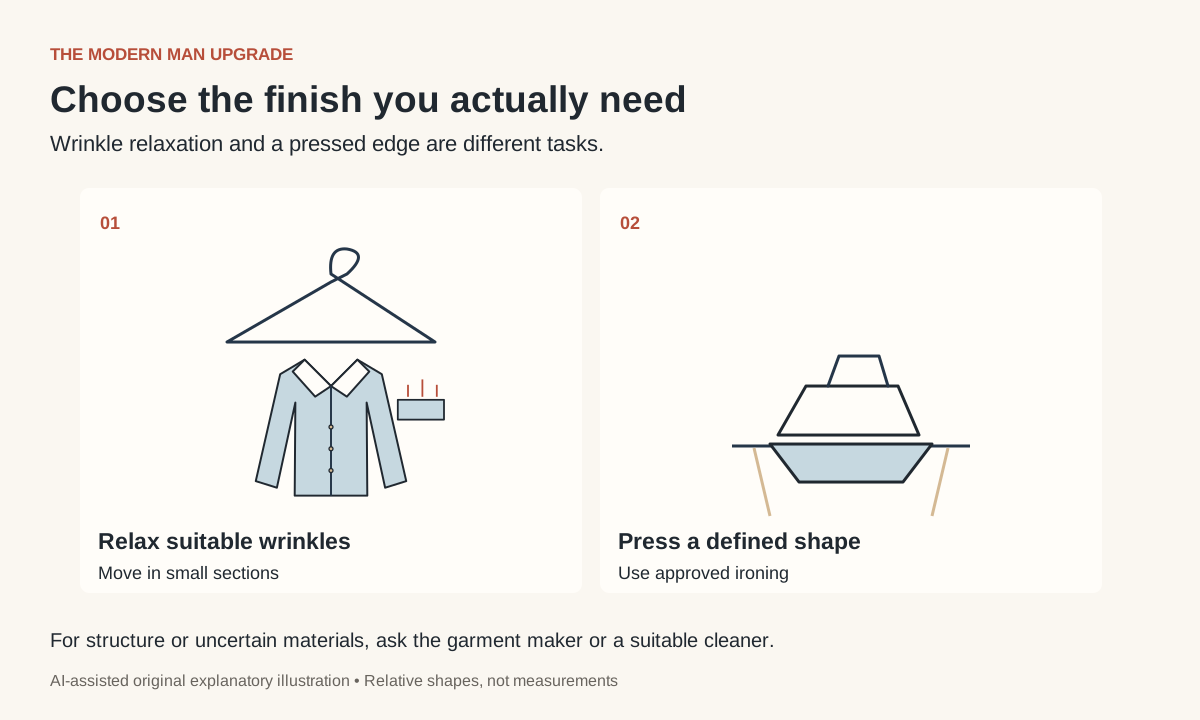
Start with the result you need. A softly wrinkled compatible shirt may be a useful steaming candidate. A collar that needs a defined pressed shape may call for ironing. A stained garment needs appropriate cleaning before you focus on its wrinkles.
Do not use a wrinkle-care tutorial as a disinfection or pest-treatment procedure. Those tasks need their own validated instructions. This guide does not establish a temperature, exposure time or result for them, and a quick pass is not proof that a garment is clean.
The shirt ironing guide gives a separate pressing routine. For a structured jacket or an uncertain fabric, ask the maker or a suitable cleaner before trying to reshape it with heat and moisture.
Read the garment label and machine manual
Inspect fabric, lining, coatings, decoration and trims. A familiar fiber name does not prove that the entire garment tolerates steam. If instructions prohibit steam or the maker advises professional care, follow that instruction. If the label is missing, identify the product and ask rather than guessing.
Check the steamer’s water requirement, maximum fill level, permitted angle, warm-up indicator and accessories. A handheld unit and a steam-generator iron are different appliances. Do not transfer an iron’s temperature setting or a generic distilled-water recommendation to an unrelated steamer.
Rowenta’s beginner guide describes preparation and moving the appliance over suitable fabric. Its care-and-use information also shows that use and maintenance details depend on the product. The actual model manual should settle water and operating requirements.
Prepare a stable hanging setup
Place the garment on a suitable hanger or the appliance’s approved support. Make sure the support cannot shift during use and that surrounding surfaces tolerate the setup. Give yourself space to move without placing the cord across a walkway or straining to reach the upper garment.
Fill and prepare the machine exactly as directed, including its requirements about power and refilling. Keep the garment off the body. Rowenta explicitly warns against vertical steaming of clothing while someone is wearing it. Keep hands and skin clear of the steam path, including behind the fabric.
Remove anything detachable that the garment instructions say to remove, and arrange the fabric without deep bunching. Do not trap a hand behind a thin panel to support it while steaming the front. Use only accessories and handling methods permitted for the device.
Test a small area before continuing
- Wait for the appliance’s ready indicator or stated preparation stage.
- Use a small inconspicuous area compatible with the test.
- Apply the model-approved contact or distance while keeping the head moving.
- Let the test area settle and inspect color, texture, spotting and shape.
- Continue only if the garment responds acceptably.
There is no universal gap between the head and fabric. Some devices call for controlled contact; others and certain fabrics need a different approach. Follow both sets of instructions rather than holding a hot head against a surface because a general tutorial says it is always safe.
Work in manageable sections. Smooth the garment using a permitted method and keep the next section accessible. If a crease persists, pause and reconsider the method rather than repeatedly soaking the same place. A wrinkle that needs pressing may not respond the way you want to vertical steam.
Stop when the result or appliance behavior changes
Stop if the surface changes, water marks appear, trims distort or the unit behaves unexpectedly. Follow the manual’s response to spitting, low water or interrupted steam. Do not hold the head in place while troubleshooting or continue using a damaged appliance.
For example, a relaxed cotton shirt may need only a short suitable touch-up before hanging to finish drying. A jacket with a structured chest may need professional pressing. Similar visible wrinkles do not mean the garments need the same treatment.
Finish, dry and maintain
Switch off, unplug, cool and empty or store the unit according to its instructions. Let the garment dry fully and settle before wearing, packing or closing it in a wardrobe. Keep it supported rather than folding a damp panel into a tight stack.
Follow the model’s cleaning and descaling schedule. Do not add fragrance, detergent, vinegar or another improvised tank treatment unless the manufacturer specifically instructs it. Changing the liquid to fix a performance issue can create another problem.
The clothes-care guide helps place wrinkle care alongside washing, repairs and storage. If a steamer repeatedly fails to give the finish you need, reconsider the task and method before assuming you need a more expensive machine.
Steamer questions
Can I use tap water?
Check your exact model. Requirements can differ, including how water hardness affects the recommendation. There is no single answer for every appliance.
Can steaming replace washing?
Not as a general rule. Soil, stains and the garment’s cleaning requirements remain separate from wrinkle relaxation.
Can I steam a suit before an event?
Only where the garment’s maker and appliance instructions permit the method. For structure, persistent creases or uncertainty, ask a suitable cleaner rather than experimenting just before the event.
Use the free Top 3 filter to choose a manageable care improvement before adding another appliance to your routine.