Choose a dress shirt collar around whether you wear a tie, the setting and how the collar behaves on you. A point has a narrower opening, a spread leaves more space, a button-down anchors the points, and a cutaway opens wider. Shape does not determine stiffness, neck comfort or how well the collar stays up when worn open.
For a restrained shirt with a tie, compare a moderate spread and a point collar with your normal knot. For frequent open-neck wear, compare a button-down or a collar with enough support to stay tidy. Try the shirt closed and open before buying; the most useful collar is one that works in your actual outfits.
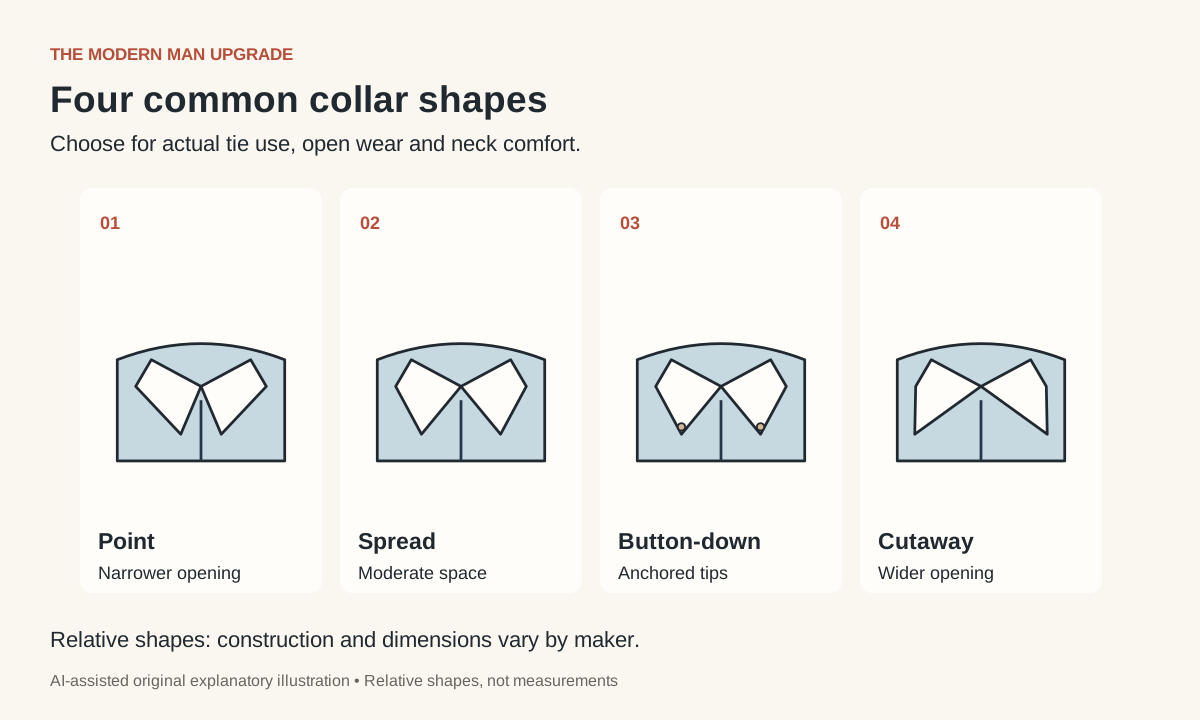
Understand the four common shapes
- Point: the tips angle downward with a relatively narrow space between them. It is a useful comparison when you wear a smaller knot.
- Spread: the tips open farther apart. A moderate spread can work with several knot sizes, depending on its actual dimensions.
- Button-down: small buttons secure the tips. It is often used on casual and Oxford shirts; its acceptability with tailoring depends on the setting.
- Cutaway: a wider opening with the tips pointing farther outward. It can look deliberate with a tie, but it is not an automatic upgrade over a moderate collar.
Proper Cloth's collar taxonomy explains these distinctions and several less common shapes. Its dimensions describe its examples rather than an industry-wide standard. Treat face-shape matching as optional style advice, not a requirement that should overrule comfort or use.
A button-down collar is different from a shirt with buttons down its front. A wing collar, tab collar or band collar also introduces a different design and use case. If an invitation requires particular formalwear, solve that dress-code question before choosing a casual favorite.
Match the actual knot to the available space
Put on the shirt with the tie you expect to wear and form your normal knot. Check whether it fits within the opening, whether the collar points lie as intended, and whether the tie sits comfortably against the neck. A bulky tie fabric can make the same knot larger than it is in a thin tie.
Use the tie-knot guide to practice the technique rather than buying a collar to compensate for an unfinished knot. You do not have to fill every millimeter of a spread with a large knot. Judge the whole shirt and jacket at a normal viewing distance.
For example, if you use a simple narrow knot every workday, compare it in a moderate spread and a point collar. If you prefer a wider opening, try the combination before committing. There is no need to move through a hierarchy from point to spread to cutaway.
For open-neck wear, test construction as well as shape
A collar can be soft or more structured within several shapes. Interlining, collar band, tip length and removable stays influence how it sits. A spread that looks upright on a product page may settle differently after wear. The solution could be construction or fit rather than a different collar name.
Proper Cloth's choosing guide notes the support provided by button-down points for no-tie wear. That makes them worth comparing under a knit or casual jacket. It does not make a button-down mandatory in every office or mean every open spread will collapse.
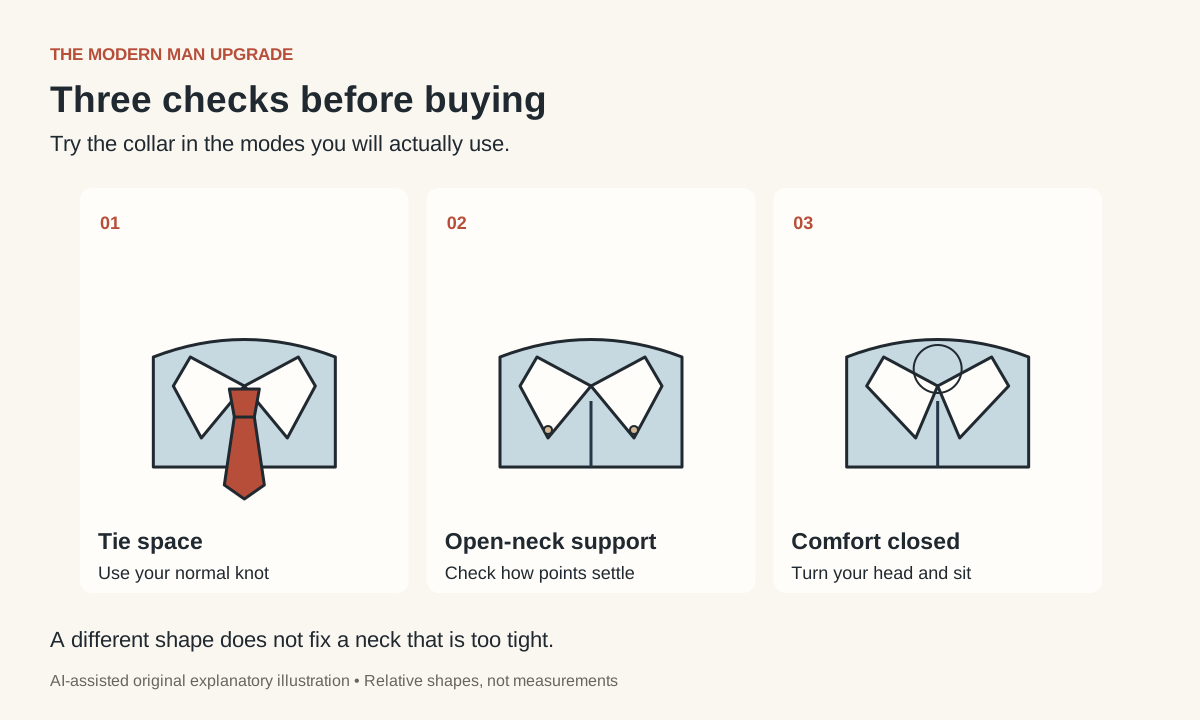
Keep neck fit separate from collar styling
If you need the top button closed, it should serve that purpose comfortably. Check swallowing, turning the head and sitting rather than using a rigid finger-count rule as the only test. A collar that bites, pulls or leaves uncomfortable pressure is not rescued by an attractive spread.
When comparing measurements online, follow the brand's method. A laid-flat collar measurement and a body circumference are not always taken from the same points. Record a reliable shirt and use the whole-shirt fit guide to check the shoulders, chest and armholes too.
A useful try-on routine before ordering more
- Try the shirt with the undershirt and jacket you normally use.
- Close the collar and form the intended tie knot if relevant.
- Open the neck as you would wear it casually and see how the points settle.
- Sit, reach and turn your head; check whether the shirt drags the collar out of position.
- Read the care instructions and check whether stays are removable before washing.
Repeat with two existing outfits. An office shirt may need to work with a jacket and a knit, while a weekend shirt may only need open-neck use. Buying for those real combinations is more practical than collecting every collar type.
Collar-type questions
Can I wear a spread collar without a tie?
Often, yes. Test its construction and how it sits open with your jacket. The shape alone does not establish whether it will stay supported.
Is a cutaway the most formal collar?
Not universally. Formalwear requirements involve the full outfit and sometimes a different collar. A wider opening is a shape choice, not a formality score.
Should I choose by face shape?
You can experiment with that visual preference, but tie use, neck comfort, construction and the setting are more concrete checks. No collar shape is compulsory for a particular face.
Prioritize a shirt that completes real outfits with the free Top 3 filter, and use the shirt-care routine to keep that choice usable.