To wash a dress shirt at home, read the care label, open the buttons, remove removable collar stays, sort the shirt with compatible colors, and use the permitted wash settings. Inspect stains before washing and again before drying. Finish with the label-approved drying method and press when needed. A white cotton shirt and a delicate silk blend do not automatically share a routine.
Prepare first, wash second: empty pockets, remove loose stays, inspect the collar and cuffs, then sort by color and care needs. Dose a compatible detergent, avoid exceeding the label's temperature limit, remove promptly, and reshape gently. Ask a cleaner for the process required rather than assuming every service is dry cleaning.
Read the whole label and inspect the dirty areas
Check fiber content, washing permission, temperature, bleach, drying and ironing instructions. The most restrictive requirement matters when you combine shirts in one load. A non-iron finish is not permission to ignore a label, and a pale color does not make high heat suitable for every fabric.
Look at the inside collar, cuff edges, underarms and front placket. Identify a known spill and deal with it using a treatment compatible with that fabric and dye. Photograph or point out an uncertain stain to a professional. A forceful scrub can damage the fabric without removing the substance responsible.
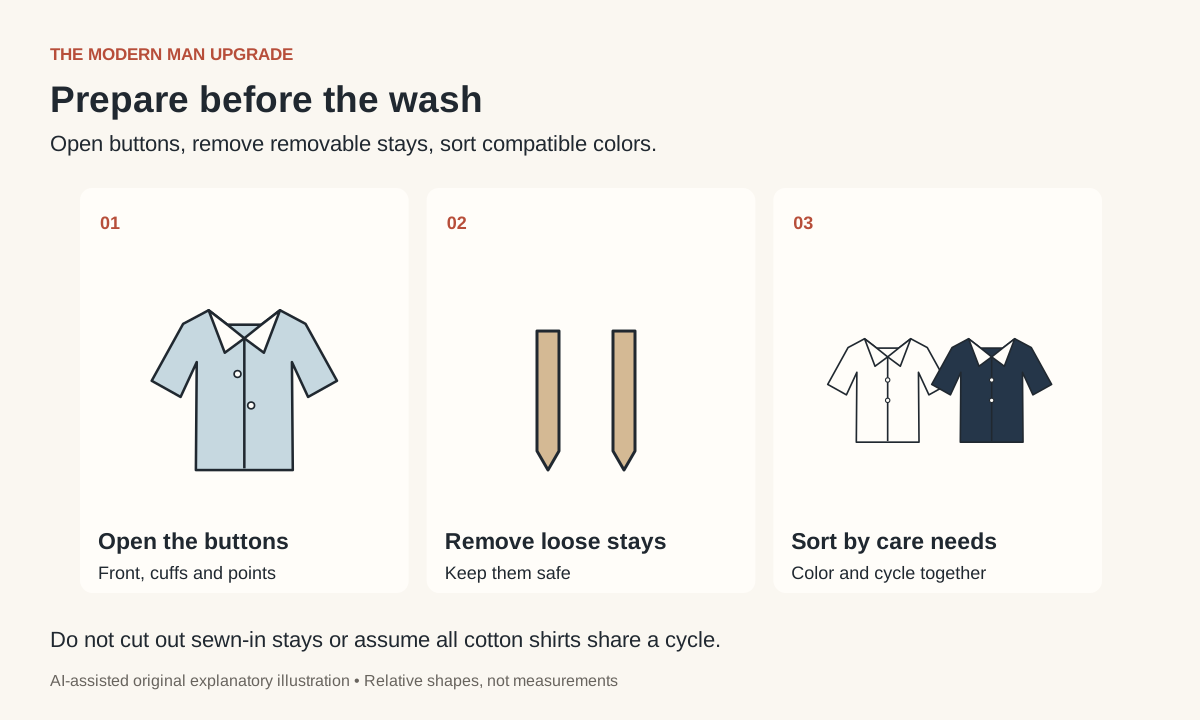
Open the buttons and remove removable stays
Proper Cloth's washing instructions call for unbuttoning the shirt, including cuffs and collar buttons, and removing collar stays. That means stays designed to be removed: do not cut into a sewn-in collar structure. Put loose stays somewhere you can find them after ironing.
- Empty pockets and check for objects caught in folds.
- Open the front, cuffs and button-down collar points.
- Take out removable stays and check for a damaged or loose button.
- Turn the shirt inside out when directed by its care instructions.
- Separate incompatible colors and fabrics, including items that could bleed dye or snag the shirt.
Keep heavy zipped garments and abrasive hardware out of a delicate shirt load. Sorting is more useful when it accounts for both color and the required cycle. A dark fine shirt and a dark heavy work garment may be the same color but still need different washing conditions.
Choose the settings, not just the word delicate
Use the label-approved cycle and a detergent suited to the fabric and colors. Measure the detergent for the load and local water conditions according to its packaging. More detergent is not a substitute for identifying a collar stain. Do not add bleach or softener automatically; verify that the garment and product instructions permit them.
Eton's shirt-washing guide explains that the label temperature is a maximum, and recommends color sorting and reduced spin for its shirts. Those are useful checks, while its drying advice remains manufacturer-specific. Choose a lower temperature only when it can still meet the actual cleaning need.
A practical load might be two ordinary light cotton shirts whose labels permit the same settings. A shirt with contrast trim or uncertain dye stability deserves its own check. Do not copy the routine from one favorite shirt onto every new purchase because they look similar on a hanger.
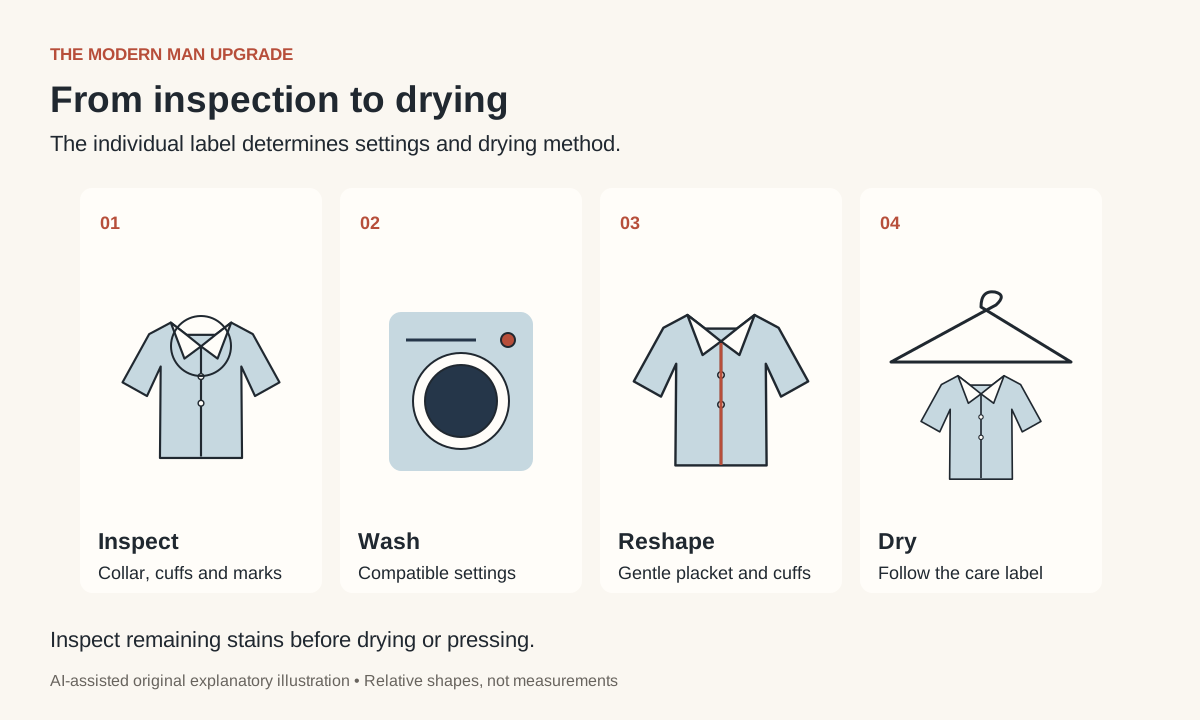
Remove promptly and finish the shape
Take the shirt out once the cycle finishes. Gently straighten the collar, cuffs and placket without tugging the wet garment into a larger size. Follow the drying label: if air drying is appropriate, use a suitable rack or hanger that supports the shirt without sharp pressure points.
If tumble drying is allowed, use the specified conditions and avoid unnecessary over-drying. The permission for one shirt does not extend to another. Inspect any treated mark before drying or pressing; if it remains, repeat only the compatible treatment or ask a cleaner rather than adding stronger products at random.
Use the shirt-ironing guide for pressing order and label-based heat. Restore removable stays when the shirt is ready to wear, and check for chipped buttons before storing it. A clean shirt that still pulls at the collar may have a fit problem rather than a laundry problem.
Home wash, wash-and-press, or dry cleaning?
Home washing gives you direct control over preparation and inspection. Professional wash-and-press commonly involves water washing followed by pressing; it is different from solvent dry cleaning. Ask which method will be used and explain the garment's care requirements, especially for a delicate blend or unusual construction.
Show the cleaner every known stain rather than assuming it will be found. Agree on starch preferences and any concern about buttons or collar shape. Judge the service by the shirt's result and its handling instructions, not merely by the shop sign. If the weekly bottleneck is care time, compare that task with other upgrades in the free Top 3 filter.
Dress-shirt washing questions
Should I wash a shirt after every wear?
Consider sweat, odor, visible soil and how it was worn. Shirts worn against skin in heat may need washing after each wear. A rigid universal schedule cannot account for every setting.
Can I wash white and light-blue shirts together?
Only when their color stability and care requirements are compatible. New or dye-releasing garments deserve separate handling according to their labels.
Does dry cleaning mean wash-and-press?
No. They are different processes even when offered by the same shop. State the care requirement and ask the cleaner which process is appropriate for the actual shirt and stain.