Store seasonal clothes only after deciding what you will need before the next rotation. Clean and dry the items appropriately, support their construction, and keep a simple record of where they went. Useful storage protects clothes without making an unexpected cold day a search through anonymous boxes.
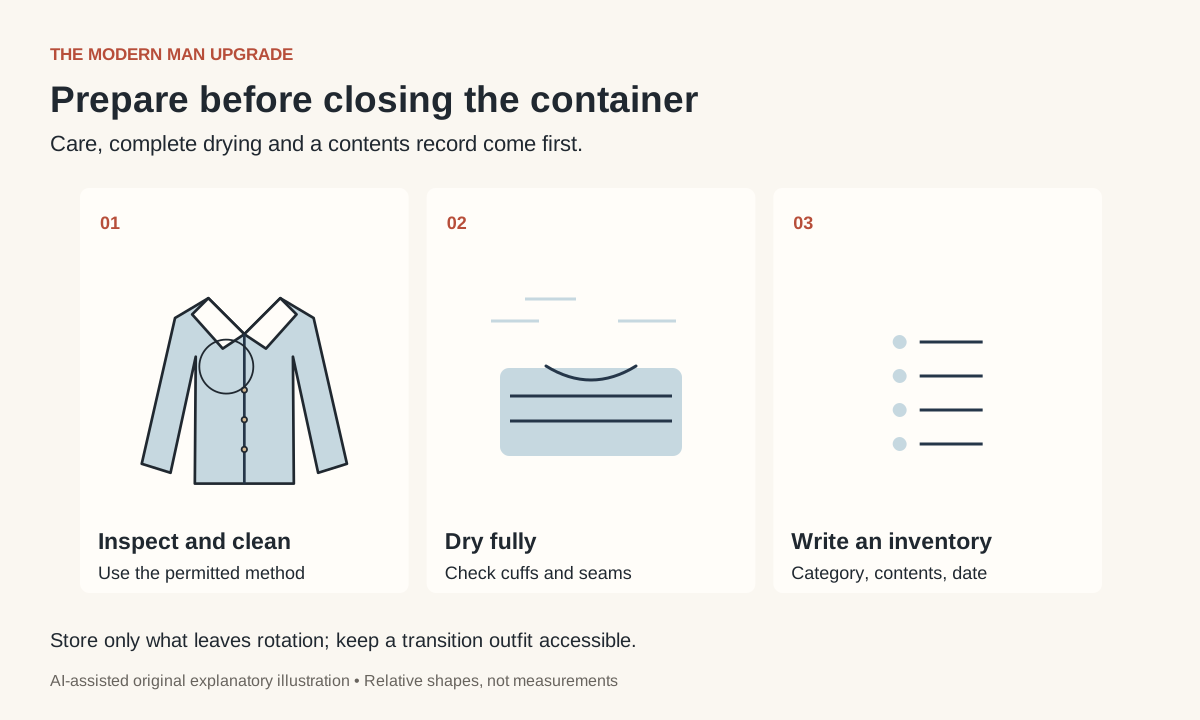
Keep a small accessible transition outfit, then inspect and clean the items leaving rotation. Let them dry fully, fold suitable knits and support structured garments. Choose containers for the material and storage conditions, label the contents and location, and check periodically for moisture or damage. Compression and scented accessories are not universal solutions.
Decide what actually leaves rotation
Begin with the coming weeks rather than a strict calendar date. Set aside clothes you will still use for travel, a formal event or changing weather. Keep one practical transition combination accessible so retrieving a sweater does not require opening every container.
Separate the remaining items into keep, repair and release. Storing a damaged garment you do not intend to fix only postpones the decision. The wardrobe audit helps with those choices; the closet guide covers everyday access once the seasonal overflow is removed.
Make a short inventory before buying containers. Count categories that actually need space and measure the shelf or cupboard you will use. An existing clean box may be sufficient. Choosing storage products before sorting can leave you with organizers sized for clothes you no longer want.
Inspect, clean and dry first
Check collars, underarms, cuffs, seams and pockets. Remove receipts, tissues and other forgotten items. Follow each garment’s cleaning label; an item worn briefly can still need attention before a long period away. Finish repairs that would otherwise be forgotten at the next rotation.
Woolmark’s storage guide recommends cleaning wool garments before storage and checking their condition during the off-season. Its comparison of containers also acknowledges moisture and compression tradeoffs. Use those distinctions rather than declaring every bag or box suitable for every garment.
Allow clothes to dry fully, including thick cuffs, waistbands and seams. Do not seal them immediately because a surface feels dry after ironing or steaming. The wool sweater guide explains supported drying where the garment requires it.
Simply Merino’s seasonal storage advice also emphasizes clean, completely dry garments before enclosing them. The practical lesson is preparation, not a promise that one container prevents every storage problem.
Choose folding or hanging by construction
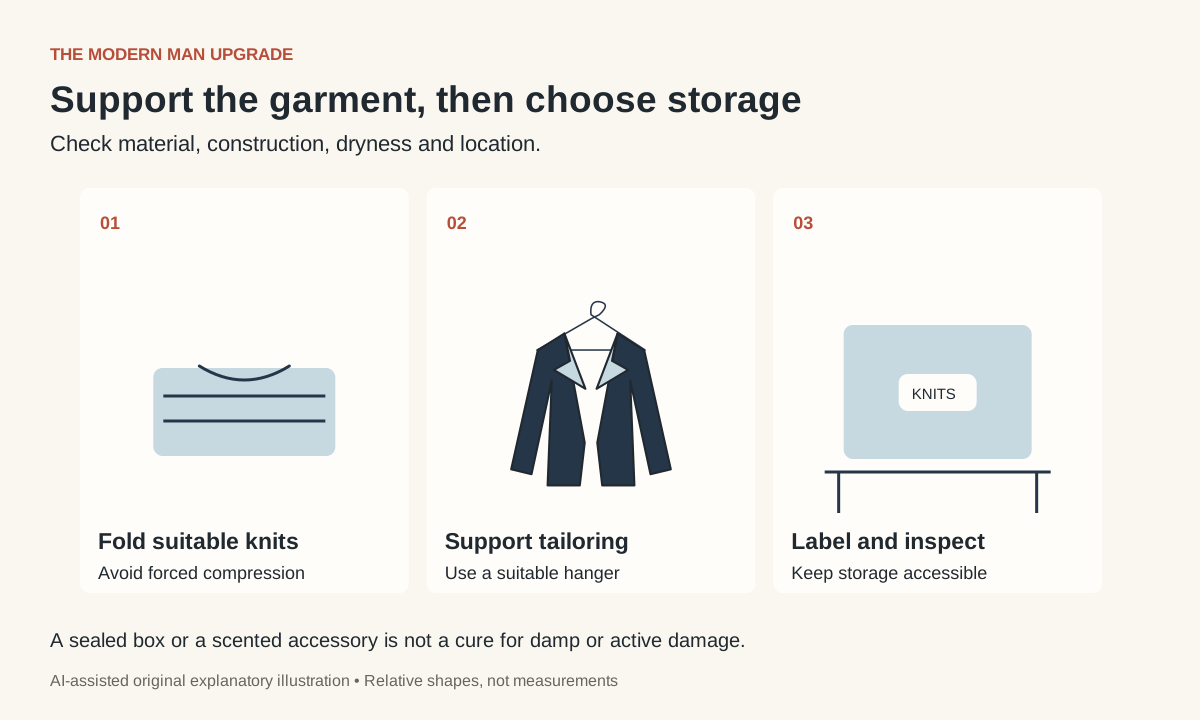
Fold suitable knitwear without forcing tight folds or piling heavy items over delicate pieces. Keep the shape relaxed. Structured jackets generally need suitable shoulder support; compare the hanger with the garment rather than using whatever narrow hook happens to be available.
Check the maker’s storage advice for unusual trims, padded garments or delicate surfaces. A soft sweater, tailored jacket and technical insulated coat have different constructions. A general rule about folding clothes does not settle all three.
Separate shoes and accessories so they cannot mark or snag clothing. Store footwear clean and dry according to its material instructions. Keep small pieces in an identified pouch or compartment that belongs with the inventory instead of hiding them in an unlabeled coat pocket.
Choose a container and a suitable place
For each category, ask what the container needs to do: keep dust away, maintain shape, fit a shelf or allow access for inspection. Then check the location. A container is not a cure for a damp room or a leak, and a dry garment can still develop problems if its environment changes.
- Folded storage: use a clean container large enough to avoid forcing the contents into a dense block.
- Hanging storage: use appropriate support and a garment covering compatible with the item and conditions.
- Compression: check whether the garment tolerates it before choosing a vacuum bag to save space.
- Location: keep clothes away from damp surfaces and somewhere you can inspect without dismantling the room.
Do not treat cedar, lavender or another scent as a guarantee against insects. If you find suspected pest damage or an active problem, separate affected items and seek suitable garment-care or pest advice. Simply adding fragrance and closing the box does not establish that the problem is resolved.
Label for retrieval and schedule a check
Use a plain label with category, storage date and location. A short contents list might say “navy cardigan, grey sweater, two scarves; upper left cupboard.” Photographing the contents before closing can make the next search easier without creating a complicated spreadsheet.
Keep the list where you already look for wardrobe notes. If a garment is removed, update the list immediately. A container marked winter clothes is less useful than one that lets you find the particular sweater needed for a trip.
Check periodically, especially if the space changes temperature or humidity. Look for moisture, unusual odor, insects or damage. Inspect rather than relying on a fixed number of months or a moisture sachet that has never been checked. Deal with an emerging problem before returning items to the daily wardrobe.
Bring clothes back deliberately
At the next rotation, inspect the garments and let folded pieces settle as appropriate before wearing. Check fit and condition rather than automatically washing everything again. Put useful pieces into the accessible part of the closet, and reconsider anything that went unused for a reason that still applies.
Seasonal storage questions
Are vacuum bags always wrong?
No single answer covers every garment. Check construction and maker guidance; delicate or lofty items can need a different approach from sturdy folded basics.
Can I store a slightly damp sweater?
Finish drying it first. Pay attention to thicker areas rather than relying on the outside surface alone.
Do I need a complete storage system?
No. Start with suitable clean containers, appropriate support and labels. Add equipment only for a recurring problem you can name.
The free Top 3 filter can turn this into a manageable task: one category, one completed care step and one labeled storage location.