Wash jeans according to the finished garment’s label, with attention to dye, stretch fibers and drying. Everyday prewashed jeans, a stretch blend and a specifically shrink-to-fit pair are different care decisions. Start by identifying which pair is in front of you.
Read washing and drying instructions together, empty the pockets and sort for compatible colors and settings. When the maker permits it, turn jeans inside out, close the zipper and use an appropriate gentle wash. Dry as directed, then check shape and fit only once fully dry. Judge the need for washing by actual use and condition rather than a compulsory wear count.
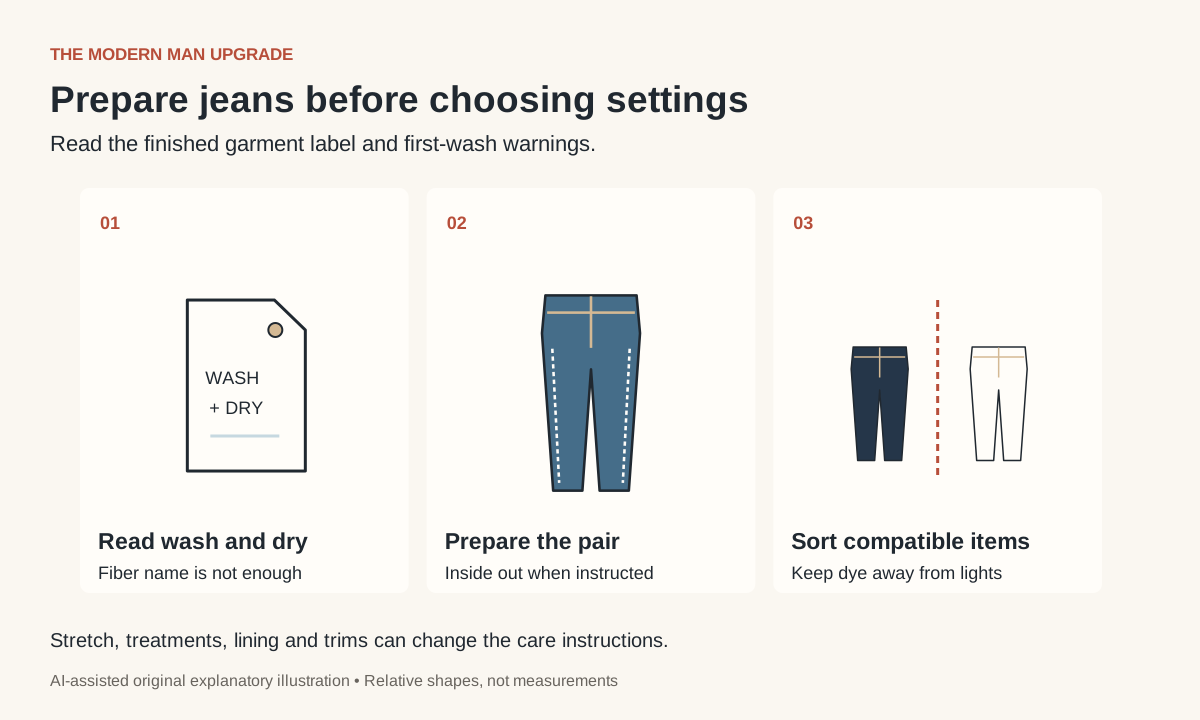
Identify the denim and read the label
Check fiber composition, care symbols and any maker instructions about first washing or shrinkage. Stretch denim includes elastic fibers that may have specific heat limitations. A product sold as shrink-to-fit needs its own instructions; do not improvise a hot wash to tighten an ordinary pair.
Raw, selvedge and shrink-to-fit describe different things and should not be treated as interchangeable washing permissions. If the product information is unclear, ask the maker before the first wash. An enthusiast’s fade routine is not a substitute for instructions for your finished garment.
For a useful reference, photograph the pair laid flat when clean and dry. Note any fit issue you already have, such as a loose waist or a tight thigh. That separates a pre-existing fit problem from a change after laundering. The jeans fit guide covers those checks.
Empty, inspect and sort
Empty every pocket and check for loose seams, damage and stains. Remove a belt and anything detachable. Follow the maker’s preparation instructions for zippers, fastenings and turning the garment inside out. Repair a failing seam before laundering if the wash could make it worse.
Levi’s care FAQ recommends inside-out washing, closed zippers, cold gentle washing and mild detergent for its denim. It also notes dye transfer from new darker pairs. These are useful first-party instructions, with the individual garment’s label still taking precedence.
Sort by compatible color, fabric and settings rather than placing all trousers in one load. Keep new dye-releasing denim away from light items as directed. A white denim pair and dark indigo jeans do not become compatible just because both are jeans. Check pocket linings and other trims as part of the finished item.
For a stain, identify the substance and use a compatible treatment according to its instructions. Test where appropriate. Do not scrub aggressively at one visible patch or assume bleach is permitted. Persil’s jeans guide also starts from garment instructions rather than one setting for every denim product.
Choose the approved machine or hand method
- Read the label’s maximum temperature, method and drying restrictions.
- Choose a compatible cycle and detergent dose for the machine and load.
- Give the load enough room to move; do not force more items into the drum.
- Check settings before starting rather than relying on the last remembered program.
- Remove the jeans when finished and proceed to the permitted drying method.
If the maker calls for hand washing, use its water, detergent and handling instructions. Prepare a basin and drying space before starting so you can support the wet pair during transfer. Avoid twisting or aggressive wringing where the care method prohibits it.
The Whirlpool jeans tutorial provides appliance-oriented preparation and washing advice. Machine controls vary, so check what the program actually does. A cycle name alone is not permission to ignore the garment’s temperature or drying limits.
Dry without turning heat into a fitting experiment
Follow the individual label. Where air drying is appropriate, arrange the pair so it is supported and can dry fully, with suitable airflow. Levi’s recommends shade and inside-out drying to help preserve its denim’s color. Do not assume the thick waistband and pocket area are dry because the lower legs feel ready.
If tumble drying is expressly allowed, use the specified conditions. Avoid adding extra heat to try to correct an unsuitable cut. A pair that is wrong at the waist, rise or thigh deserves a fit assessment; repeated heat experiments are an unreliable way to tailor it.
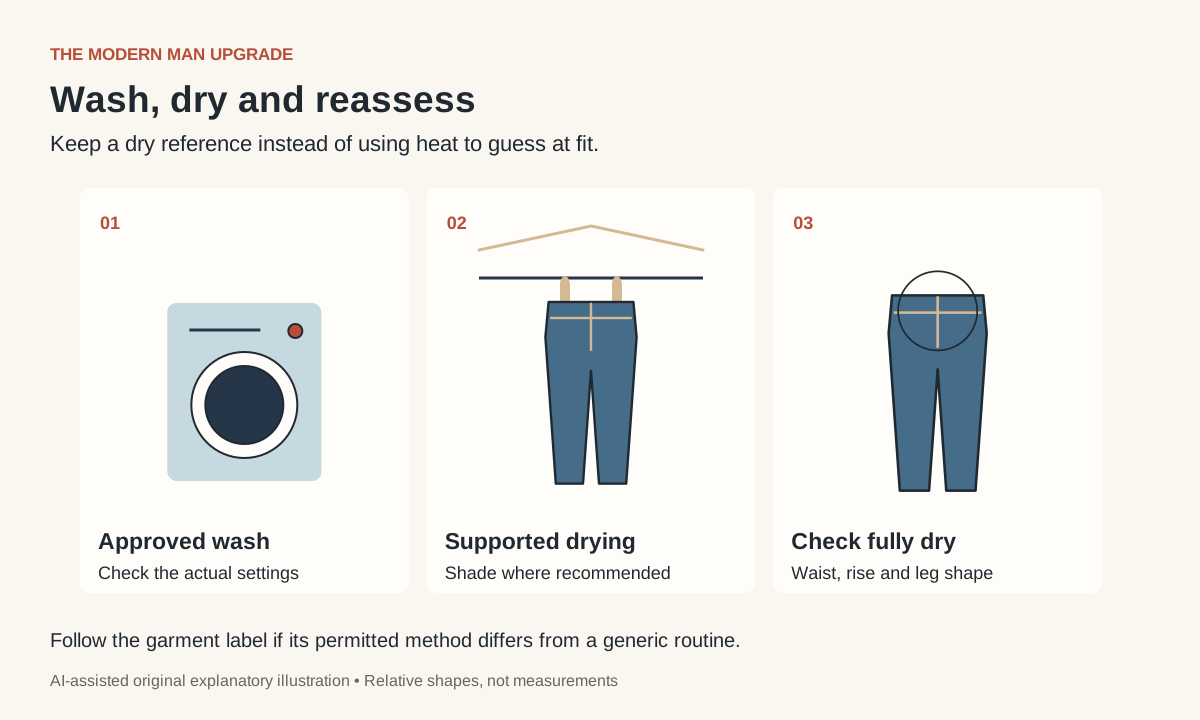
Check fit when fully dry
Let the pair finish drying and return to normal room conditions before comparing it with your reference. Put it on with the waistband at its usual height. Sit, step and bend. Notice whether the change is temporary stiffness, a laundering problem or the same original fit issue.
If a change is substantial, stop repeating the process in the hope that another wash will reverse it. Check the exact product instructions and ask the maker about the treatment. Record the settings you used so the conversation is concrete.
Use condition rather than a rigid wash calendar
Work, climate, spills and contact with skin vary. Inspect the pair and wash when its condition calls for cleaning, while respecting care instructions. A suggested number of wears is not a hygiene or durability guarantee. Airing can be useful between suitable wears, but it does not remove every kind of soil.
The general care guide organizes wardrobe routines; this page supplies the denim-specific checks. Keep a simple note if a particular pair has unusual instructions instead of relying on memory at laundry time.
Jeans washing questions
Must I wash after exactly ten wears?
No. Assess condition and use. A maker’s suggested interval is guidance for a context, not a requirement to keep wearing a dirty pair.
Will washing permanently fix a loose waist?
Do not rely on it. Check the garment’s treatment and fit, then consider an appropriate alteration or different cut.
Do all dark jeans bleed dye?
No universal prediction fits every treatment. Read warnings and follow first-wash sorting instructions for the actual pair.
Use the free Top 3 filter if you need to prioritize a small care correction before replacing usable denim.