Jeans should stay at your intended waist position, give usable room through the rise, seat and thighs, and form the leg shape you chose. Straight, tapered and relaxed jeans can all fit well. The deciding test is whether you can sit, walk and use stairs without pain, strong seam strain or constant adjustment—not whether the tag says slim.
Try two cuts as well as two nearby sizes. Set the waistband, sit fully, step up, and check the crotch and pockets. Then look at the hem with your regular shoes. If the waist works but the thighs do not, a different pattern is often more useful than buying a bigger version of the same cut.
Separate size, rise, room and leg shape
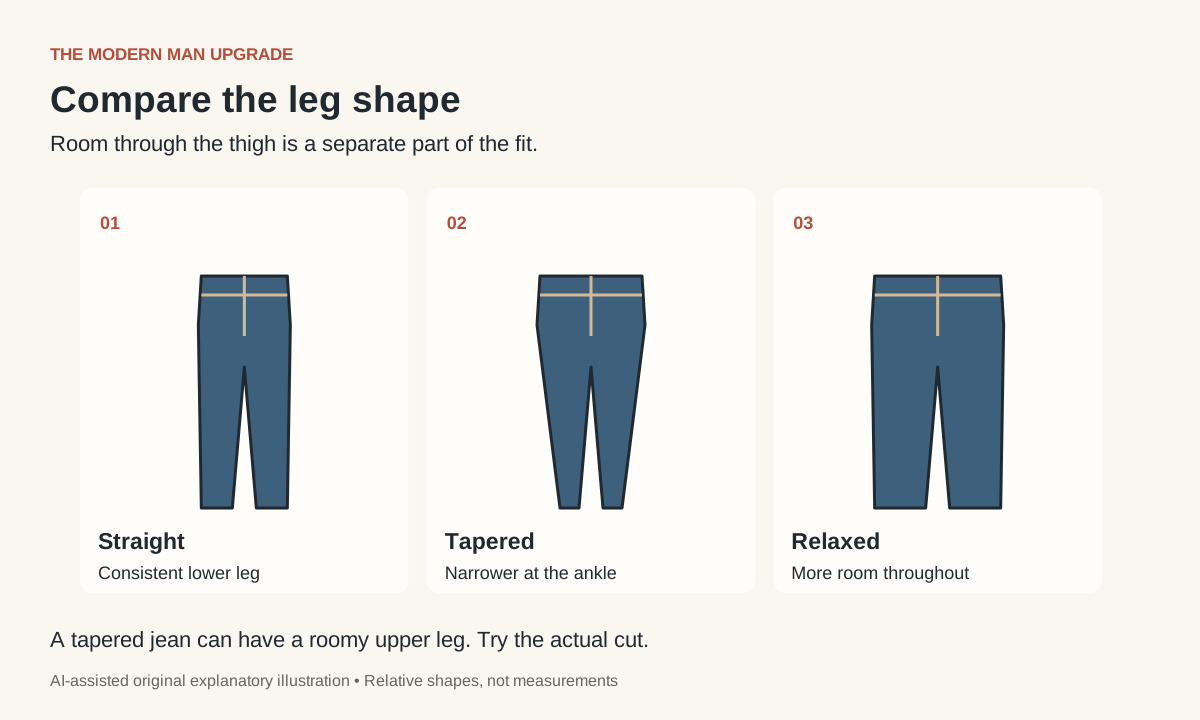
A waist label describes only part of the fit. Rise concerns the distance from the crotch to the waistband, while room through the seat and thigh determines how you move. The lower leg can be straight or tapered independently of that upper room. Two jeans with the same tag can therefore behave differently.
Levi's denim guide distinguishes straight, tapered, relaxed, slim and other categories. It describes a taper as narrowing toward the ankle and a straight leg as retaining its width from the knee. Those labels are useful starting points, but another brand's terminology and measurements can differ.
- Straight: a relatively consistent lower-leg line. Compare thigh room separately rather than assuming straight means loose everywhere.
- Tapered: narrower toward the ankle. Useful when you prefer a cleaner opening but still need space higher up.
- Relaxed: more room for a less close silhouette. It should still have a deliberate waistband and usable length.
- Slim or skinny: a closer outline. Choose it only when the garment still supports your intended movement and comfort.
These are design choices rather than rankings. You do not need to select a cut based on a rigid body-type chart. Start with how you want the outfit to look and what your daily activities require.
Use the fitting room as a movement test
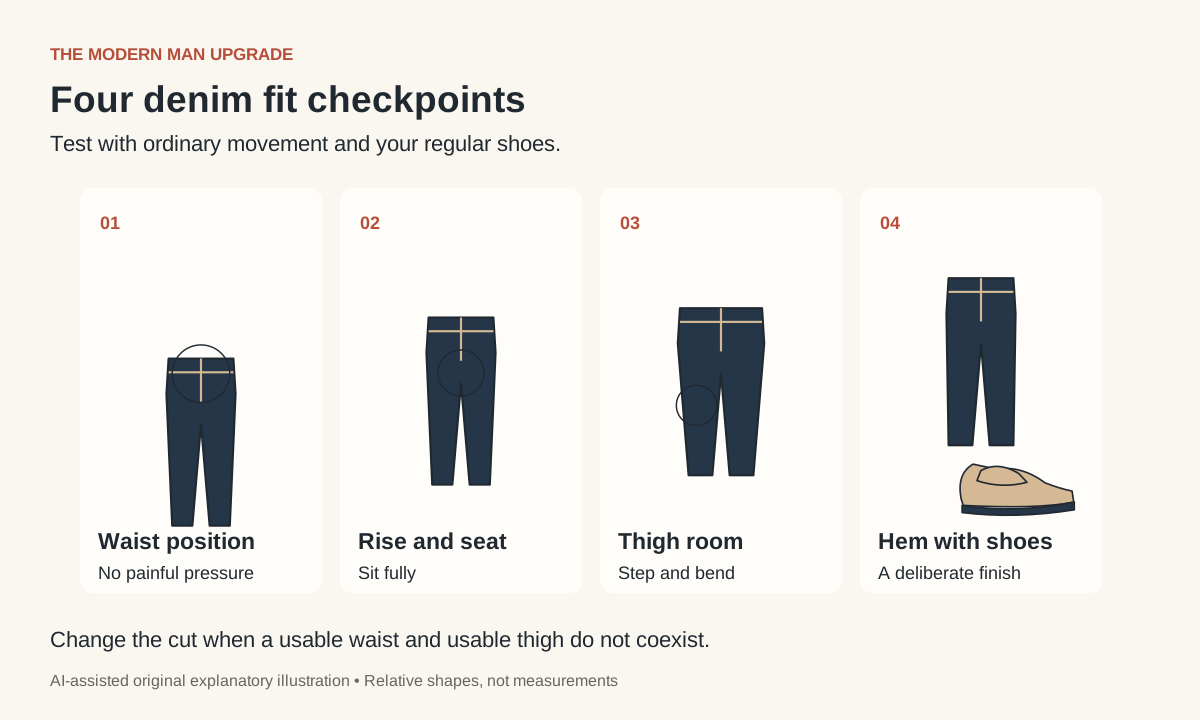
- Waist: fasten the jeans normally. They should sit where you intend without painful pressure or a belt collecting a large bundle of excess cloth.
- Rise: sit fully, then stand. Check for pulling upward, sagging far below, or a waistband that changes position repeatedly.
- Seat and thigh: bend and take a comfortable step up. Notice pockets pulled open or seams under strong strain.
- Knee and calf: walk and see whether the leg returns to place or catches.
- Hem: try the regular shoes. Decide whether a clean ending, cuff or deliberate stack belongs in this outfit.
Bring an ordinary top, or use the one you are wearing, to judge the proportions. A fitted photograph of one pair is not enough if you commute seated or climb stairs throughout the day. Take notes on the problem location rather than dismissing the whole garment as too small.
Account for stretch, rigid denim and washing
Check the fiber label and the maker's description. Stretch denim can feel different from rigid cotton denim, even in the same named cut. Some denim is sold with specific shrinkage or first-wash instructions. Do not buy painful jeans on the assumption that they will stretch exactly enough later.
If you are considering raw or shrink-to-fit denim, use the maker's instructions for that specific product and understand the return conditions before washing. This is a separate purchase decision from ordinary prewashed jeans. A promised change in fit needs an actual product specification, not a rule borrowed from another model.
The clothes-care guide provides the general organization, while the jeans label supplies the permitted wash and dry method. Record whether a reliable reference pair was measured before or after laundering so that your later comparison is meaningful.
Choose a hem for the shoes you already wear
A small cuff can be useful for comparing an unfinished length, but a bulky roll may create a different silhouette from a permanent hem. Try the cuff with both standing and walking. Do not let the back edge drag under the heel; equally, a deliberately shorter jean is not automatically a fit error.
For example, a straight dark pair might work with sneakers and an Oxford shirt, while a relaxed pair with substantial shoes may use a fuller line. If the outfit requires changing every shoe you own, pause. The basic wardrobe guide helps turn one confirmed gap into a useful purchase.
Keep a garment record for online comparisons
Measure a pair that already works using the retailer's stated method: waist laid flat, rise, thigh, opening and inseam where available. Compare garment measurements to garment measurements, not a flat width directly to your body circumference. Note the fabric, cut and wash history alongside the numbers.
Check returns before ordering, keep tags until the home movement test is complete, and do not assume a model number is identical across every version. Use the free Top 3 filter to compare a denim replacement with a possible alteration or another wardrobe bottleneck.
Jeans-fit questions
Should new jeans feel tight?
They should fit their intended design without painful restriction. Do not rely on an unspecified amount of future stretching to rescue a poor fit.
Why do jeans fit the waist but pull at the thighs?
The pattern may not provide enough upper-leg room for you. Compare a different cut with the same usable waistband before simply sizing up.
Are relaxed jeans just oversized jeans?
Not necessarily. A designed relaxed cut can add room in selected areas while controlling the waist and length. Arbitrarily sizing up changes several measurements at once.