Wear an overshirt over a base that works on its own, then check whether you want the outer layer open or fastened. Its heavier shirt-like construction can be useful for changing temperatures, but the actual cut determines how much room it offers.
Try the overshirt with the tee, shirt or fine knit you intend to wear beneath it. Reach and sit with it open and buttoned, compare the two hems and test any coat you will add. Build the indoor outfit first so taking the overshirt off is straightforward. Do not automatically size up or expect a shirt-jacket to replace weather protection.
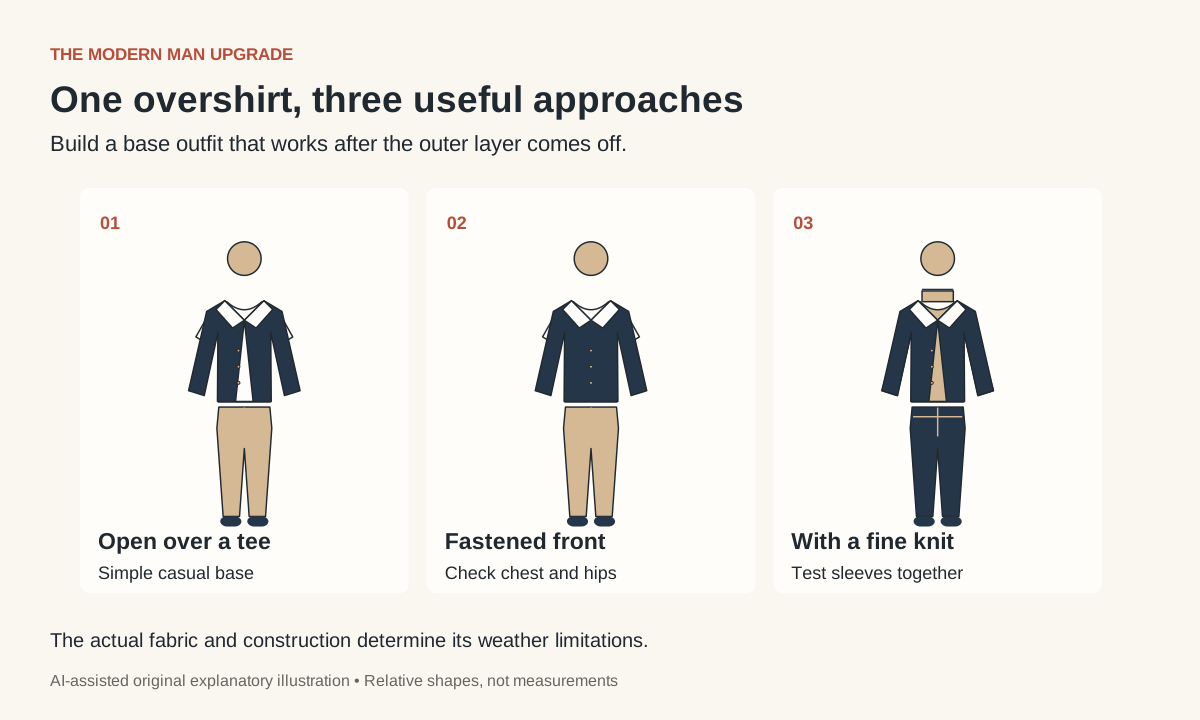
Decide whether it is the outer layer or a middle layer
An overshirt occupies the space between an ordinary shirt and lighter outerwear. Products called shackets or shirt-jackets can vary substantially in weight, lining and construction. Look at the actual garment rather than assuming those names all describe the same warmth, fit or washing method.
Charles Tyrwhitt’s overshirt guide demonstrates open and buttoned arrangements over tees and knitwear. The useful starting point is room for the intended base. Its preferred hem positions and dress-code descriptions are styling suggestions, not compulsory measurements.
If the overshirt is your outer layer, consider pocket access, closure and conditions. If it must fit under a coat, check the combined sleeves and collars. A garment can work in one role without working equally well in the other. Name the main role before choosing a size.
Fit it over the actual base
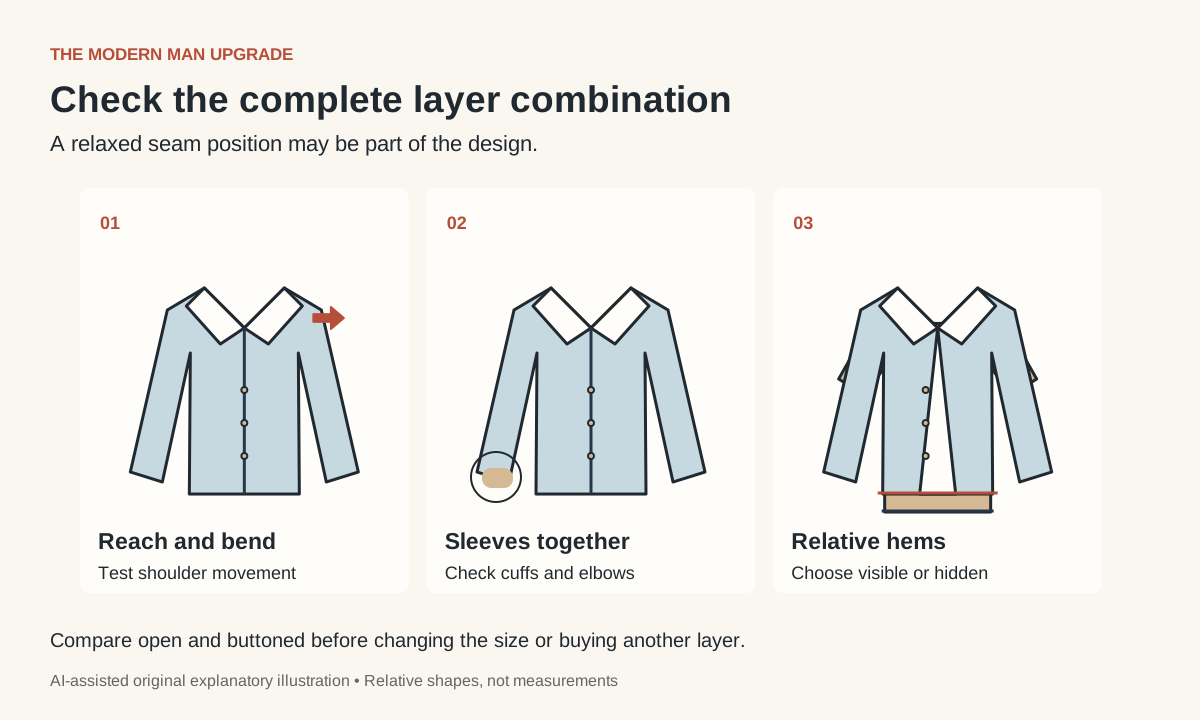
Bring the intended base layer to a try-on or use it when testing an online purchase at home. Start with the base fitted and settled properly. A twisted sleeve or a bunched hem can create misleading folds in the overshirt.
- Put it on open and let the shoulders settle naturally.
- Fasten it as designed and check the front for unwanted strain.
- Reach forward, lift your arms and bend your elbows.
- Sit and stand, checking the lower front and pockets.
- Compare another cut if comfortable closure and usable sleeves do not coexist.
A relaxed product may use dropped shoulders deliberately. UNIQLO’s denim overshirt description is one manufacturer example of that design. The seam sitting below the natural shoulder is therefore not, by itself, proof that every overshirt is too big.
Check the size chart’s definitions if comparing measurements. Body circumference and a flat garment width are different records; the measurement guide explains how to avoid mixing them. The actual cut still needs a movement check.
Compare open and buttoned with the same trousers
Worn open, the overshirt shows more of the base and its hem. Buttoned, it presents a more continuous front and may expose pulling across the chest or hips. Try both before deciding that a color or size is wrong. A change in fastening can alter the appearance without adding another garment.
Look at the relationship between the inner and outer hems. A visible base hem may be intentional; if you dislike the result, compare a shorter base or an appropriate tuck rather than assuming a fixed length applies to everyone. Check after reaching because the layers can move differently.
Leave sleeves uncomplicated for the first comparison. Rolling two thick cuffs together can add bulk and restrict the elbow. Try the cuffs as designed, then adjust them only if movement and the garment’s construction permit it. The goal is an outfit you can wear without constant resetting.
Build three combinations before buying another color
Everyday casual: an olive overshirt over a grey tee with dark jeans and simple shoes. Use existing clothes and compare the base neckline with the overshirt open. Keep the rest of the outfit steady while deciding whether you like that combination.
Chinos and a fastened layer: a navy overshirt over a comfortable base with stone chinos. Check the waist and lower buttons while sitting. The chino guide covers the trousers; this page checks how the upper layer behaves over them.
A fine knit underneath: a brown overshirt over a light fine-gauge sweater with charcoal trousers. Test the forearms and neck area carefully. If a coat is required, try all three actual pieces before assuming the combined bulk will work.
For a workplace or dinner, confirm the venue’s expectations. A darker overshirt does not automatically become a suit jacket. If your wardrobe needs a prescribed formal option, use the right garment for that setting instead of trying to reinterpret the requirement.
Plan the version you wear indoors
Take the overshirt off during the fitting and inspect the remaining outfit. The base should provide the coverage, condition and comfort you want inside. This simple test matters on a commute where a useful outdoor combination may become too warm after arrival.
The capsule wardrobe guide helps decide whether this layer fills an actual gap. Check care before purchasing: a wool blend, lined shirt-jacket and unlined cotton overshirt may need different routines. Read the individual label rather than copying settings from a similar-looking shirt.
Overshirt questions
Should it be tucked in?
Many shirt-jackets are designed as untucked layers. Check the cut, thickness and intended use; do not force a bulky hem into the waistband to imitate a dress shirt.
Can I wear it without a T-shirt?
Possibly, when the fabric, construction and coverage feel suitable. Compare comfort and care requirements instead of assuming every overshirt works directly against skin.
Is it a winter coat?
Not automatically. Check lining, insulation, weather specifications and your actual conditions. Some are light layers despite their substantial appearance.
Use the free Top 3 filter if you need to compare this purchase with a more urgent fit, footwear or clothing-care task.