Smart casual means looking considered without automatically wearing a suit. For most uncertain social plans, start with a collared shirt or neat knit, chinos or tailored trousers, and clean leather shoes. Then adjust to the host, venue, weather, and any written rules. The label alone does not tell you whether jeans or sneakers will be welcome.
If you have no further information, wear an Oxford shirt, plain chinos, and loafers or Derbies. Add an unstructured jacket for a smarter dinner or invitation. Keep dark jeans and minimal sneakers for settings that explicitly accept them. You can usually remove a jacket more easily than you can change your shoes at the door.
What does smart casual mean in this setting?
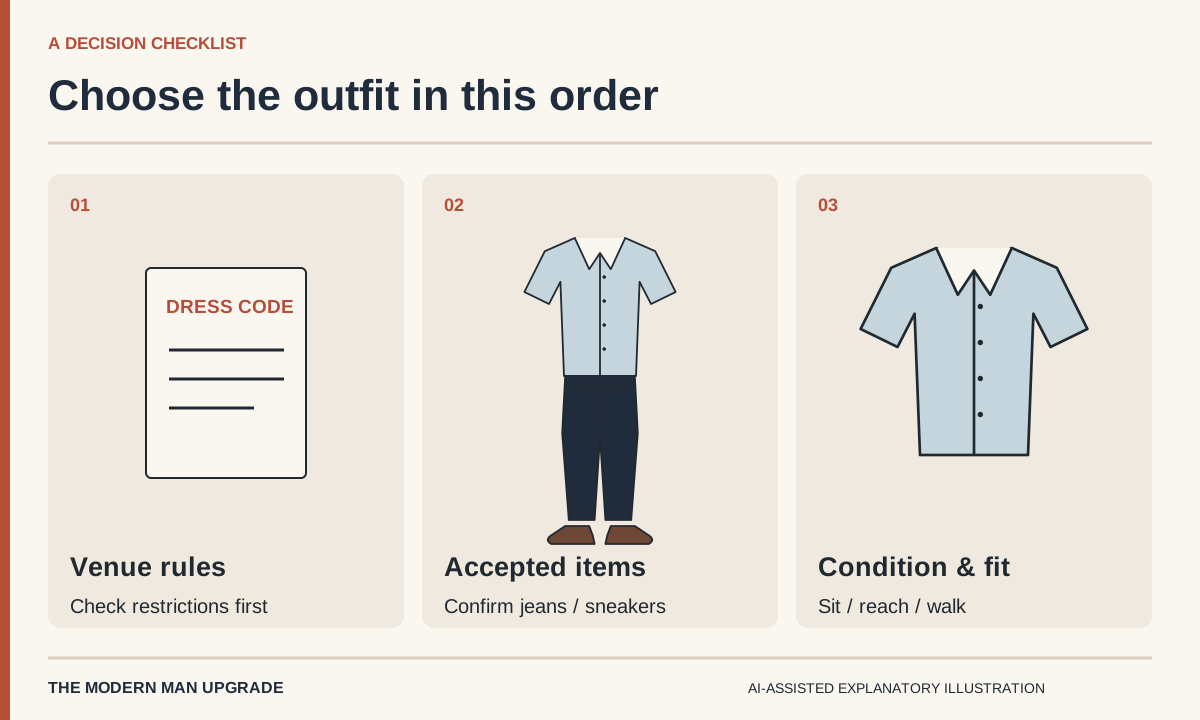
Read the actual restrictions before interpreting the general label. A venue can require a jacket or prohibit trainers even when its website says smart casual. Ask a specific question if the rules are unclear: would a collared shirt, chinos, and loafers be suitable? That is more useful than asking whether the event is dressy.
Debrett's dress-code guidance separates formal and informal smart casual. Its formal version includes a jacket, collared shirt, non-denim trousers, and smart shoes; its informal version allows clean dark jeans. That distinction explains why two otherwise reasonable outfit lists can disagree.
- Relaxed social: an informal restaurant, gallery visit, or a host who confirms that clean denim is fine.
- Middle ground: a dinner reservation or social gathering where you want a tidy default but have no strict rules.
- Traditional or restricted: a club, formal invitation, or venue with a published jacket or footwear requirement.
This guide focuses on social and venue decisions. An office introduces a different question: what does the workplace expect from your role? Use the business casual guide for that. A wedding also has its own invitation-led rules; check the wedding guest guide rather than assuming a restaurant outfit will transfer.
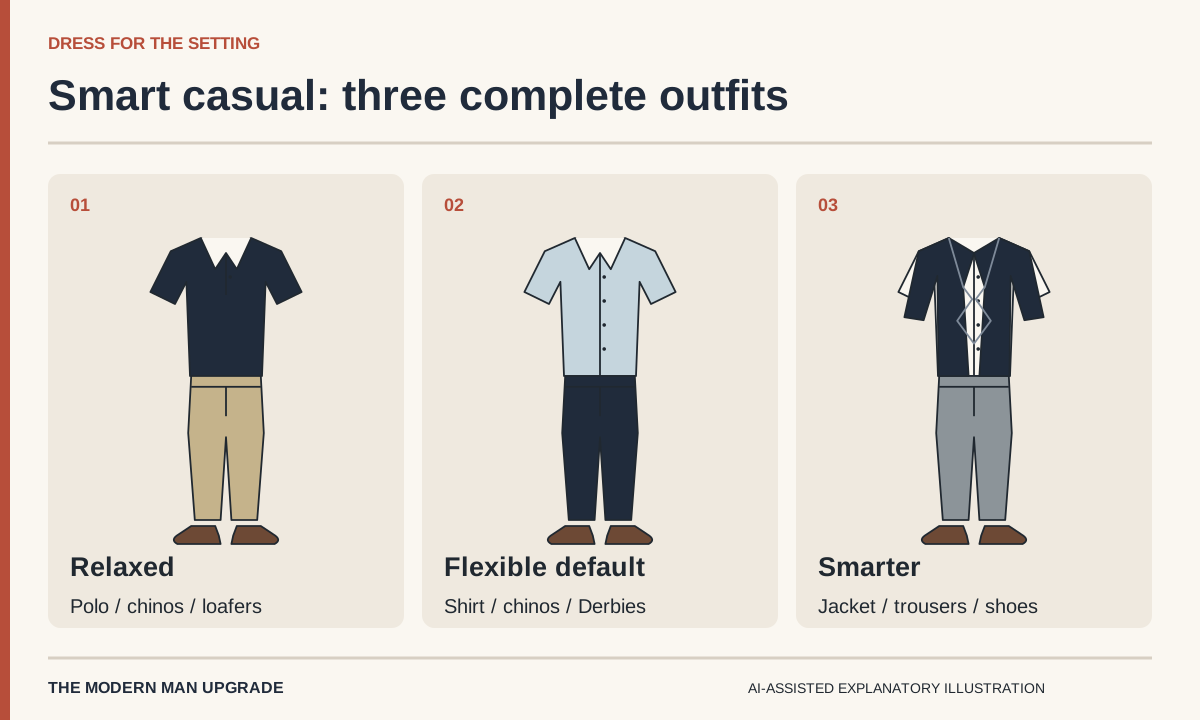
Three smart casual outfits you can build from what you own
Relaxed: polo, chinos, and understated shoes
Try a navy polo, stone chinos, and brown loafers. Clean, simple sneakers are an alternative only when the setting permits them. Choose a polo whose collar holds its shape and trousers that let you sit comfortably. If the polo looks bulky when tucked, test it untucked with an appropriate hem length rather than forcing a formal finish.
Flexible default: shirt, chinos, and leather shoes
A light blue Oxford shirt, dark chinos, and brown Derbies cover many ordinary dinners. A plain cardigan or fine knit can add warmth. The advantage is that each piece also works in less dressy combinations. You do not need to buy a special occasion wardrobe for a meal you attend once.
Smarter: separate jacket, shirt, and tailored trousers
Use a navy unstructured jacket, pale shirt, grey trousers, and dark leather shoes. A jacket sold as a separate is easier to combine than a very formal suit jacket whose fabric clearly expects matching trousers. The jacket comparison guide explains that decision. Follow an explicit tie requirement if there is one.
These examples are starting points. Substitute the neutrals you already wear, and keep the level of formality consistent. If the trousers feel wrong whenever you sit, solve the fit problem before adding accessories.
Are jeans and sneakers smart casual?
Sometimes. Their acceptability comes from the setting, not from a universal exemption for expensive brands. If denim is allowed, dark plain jeans without distressing are a restrained starting point. Check the hem, knee condition, and how they look with the chosen top. A cleaner pair of chinos may solve the uncertainty without spending anything.
For sneakers, check the venue first and then the shoe itself. A simple, clean pair generally looks quieter than conspicuous athletic footwear, but neither is appropriate where trainers are prohibited. Choosing leather shoes is useful when the invitation is ambiguous; it is not a claim that sneakers are always careless.
Smart casual also does not mean replacing every casual item with tailoring. A relaxed lunch can look awkwardly formal if you arrive in a full business suit. Keep one complete outfit appropriate to the occasion rather than stacking every smart item you own.
Adapt the same formula to heat, cold, and walking
In warm weather, use a breathable shirt or polo and lighter trousers when the code allows them. Do not assume that heat makes shorts acceptable at a venue that expects long trousers. In cold weather, add a compatible knit and a coat you can remove without leaving an unfinished outfit.
Build around the activity as well as the photograph. If the evening includes a long walk, wear shoes you already know are comfortable. A light rain plan may matter more than choosing another accessory. For an active first meeting, the first-date outfit guide helps balance presentation and movement.
Run a ten-minute outfit check before shopping
- Write the setting: the venue, restrictions, transport, and likely temperature.
- Lay out one full outfit: include shoes, socks, and the outer layer.
- Try it on: stand, sit, reach, and walk. Check the waistband, collar, hems, and how the layers move.
- Prepare it: press the shirt and clean the shoes. A missing button or damaged hem is a repair task.
- Name one remaining gap: buy only if an item you own cannot cover it.
For example, if your shirt, chinos, and loafers work but the shirt needs pressing, the next action is ironing. It is not a new blazer. Compare a confirmed purchase with your other priorities using the free Top 3 filter.
Smart casual questions
Do men need a blazer for smart casual?
Only when the venue requires one or when it fits the level of the event. For an uncertain invitation, a separate jacket is a useful removable layer. Informal settings may be well served by a collared shirt or knit without one.
Can I wear a T-shirt?
In an explicitly relaxed setting, a plain T-shirt can work inside a considered outfit. For an unknown or traditional smart casual invitation, choose a collar instead. Adding a blazer does not automatically make every T-shirt acceptable.
Is smart casual the same as business casual?
They overlap, but the authority differs. Smart casual social clothing answers to the host or venue; business casual answers to the workplace. Use the actual requirements of each situation.
Source and scope: Debrett's guidance was checked on September 30, 2026. Outfit combinations and the decision checklist are this site's editorial examples, not universal etiquette rules or reports of personal wear tests.