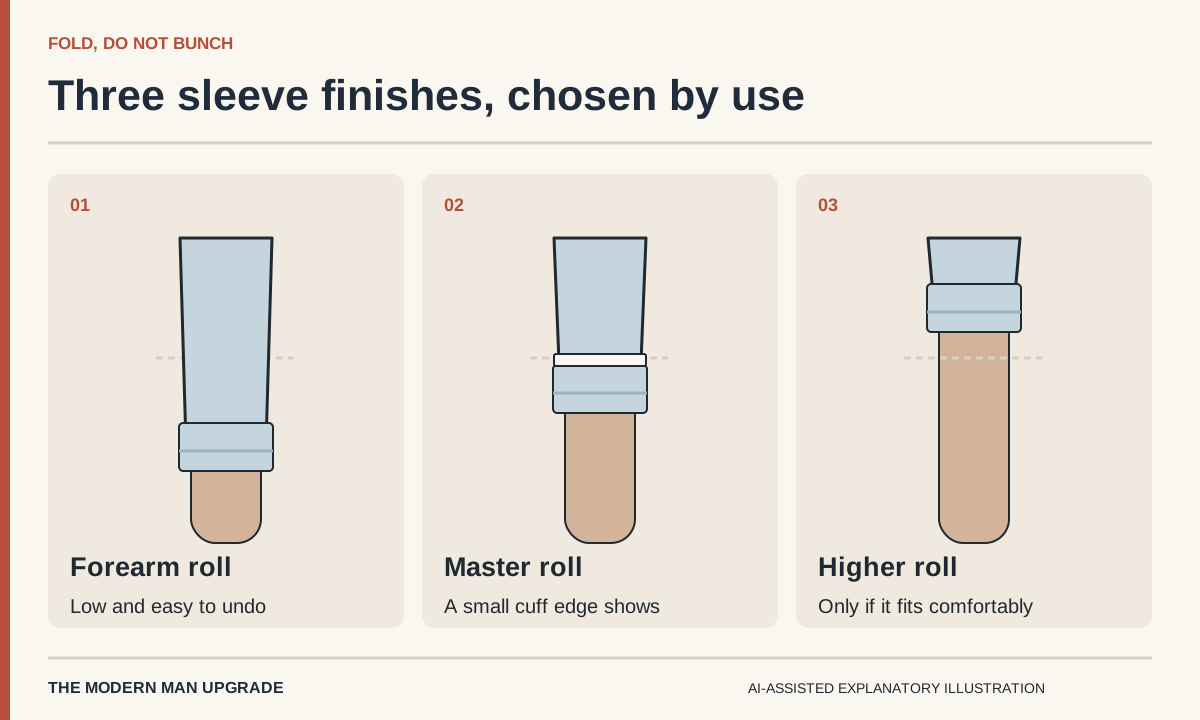
Undo the cuff and the small button on the sleeve opening, if your shirt has one. Fold rather than bunch the fabric, and stop at a comfortable height. For an ordinary casual finish, try a low forearm roll first. For a more deliberate cuff detail, try a master roll. A higher roll is useful only when the sleeve has enough room.
Use the cuff as a guide: fold it back, fold once more to cover it, then compare both arms. Keep the band loose enough to bend your elbow comfortably. If you need a higher finish, start again rather than twisting an already tight roll farther up your arm.
Start with the cuff open and the fabric flat
A fast roll is easier when the sleeve starts smooth. Undo the cuff, then the button farther up the slit, often called the gauntlet or sleeve-placket button. Make sure the opening is not under tension. Remove cufflinks before attempting to roll a French cuff; its extra fabric can make a bulky band, so leaving it down may be the better choice.
The shirt ironing guide explains how to smooth cuffs and sleeves first. You do not need to press every fold sharply, but a crumpled starting sleeve gives you less control over where the fabric gathers.
Try the method on a shirt with sleeves that fit when unrolled. Rolling is not a permanent answer to cuffs that cover your hands. If the sleeve is already tight around your forearm, several additional layers may make it tighter rather than more stylish.
Method one: a low forearm roll
This is the simplest place to start, particularly if you want to lower the sleeves again later. Art of Manliness' illustrated sleeve guide demonstrates a forearm roll with few folds.
- Turn the open cuff back so the inside faces outward.
- Fold once more, roughly following the cuff width, so sleeve fabric covers the cuff.
- Settle the band below the elbow and smooth any folded corners.
- Repeat on the other arm and bend both elbows to check comfort.
The exact height depends on cuff depth and sleeve length. Do not force the band to a fixed point just because a diagram shows it there. For a light shirt at a relaxed dinner, a comfortable low roll is often enough; you do not need to add more layers for the sake of making it look engineered.
Method two: a cuff-first master roll
The master roll folds a larger section upward, then brings the lower fabric over the cuff. It can leave a small strip of cuff lining visible. Real Men Real Style's step guide demonstrates this cuff-first construction and how to unfold it.
- Turn the cuff outward and bring it toward the point where you want the roll to finish, usually near the elbow.
- Smooth the long inside-out section underneath it.
- Fold that lower section upward over the cuff, leaving a small cuff edge visible if you like.
- Adjust the band without cinching it, then compare the other arm.
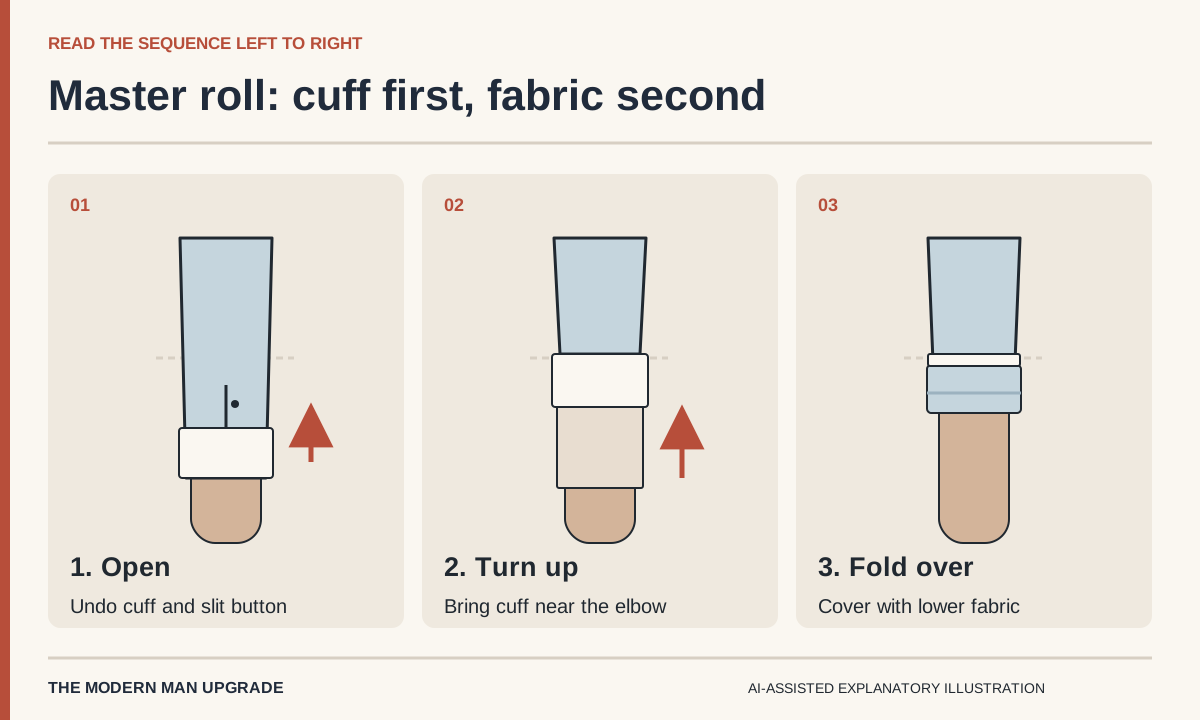
A contrasting cuff can make the construction clearer, but contrast is optional. If there is not enough sleeve width to form the band comfortably, choose the low roll or leave the sleeve down. The method cannot change the circumference of the shirt.
Method three: a higher roll for getting sleeves out of the way
Begin with an open cuff and continue folding in even bands until the sleeve clears the elbow, if it can do so comfortably. Test the full bend before continuing your activity. A looser casual shirt usually gives you more room than a closely fitted dress shirt.
A higher roll is a practical option for ordinary tasks such as washing up. It is not a substitute for workplace safety clothing or rules about loose garments around machinery. If the task has its own clothing requirements, follow them.
Use only as many folds as the garment needs. Several tight turns on a fitted sleeve can make a bulky ring around the upper arm. Starting again with a different method is quicker than fighting the same roll all evening.
Fix slipping, unevenness, and tightness
- The roll slips: unfold it, smooth the sleeve, and try a broader fold or another method. If the fabric is very slippery, leaving it down may work better.
- One side is higher: compare cuff width and fold count. Reset the uneven arm rather than dragging the finished band.
- The elbow feels restricted: loosen or lower the roll. If that fails, use a more suitable shirt.
- The cuff sticks out awkwardly: check that the corners are lying flat before covering them with the next fold.
- The roll forms a hard lump: reduce the number of layers or choose a lower finish.
The useful test is ordinary movement, not whether the band survives a rigid pose. Reach forward, bend your arms, and sit at a table. If you repeatedly adjust the same sleeve, use the clothing fit guide to assess the starting garment instead of adding a tight elastic band.
Decide whether rolled sleeves fit the occasion
Rolled sleeves usually read more relaxed than cuffs worn down. Check the workplace or venue rather than assuming they are acceptable everywhere. At a traditional formal event, keep the cuffs down unless the host or circumstances clearly call for a change. In a casual office or social setting, a neat roll may fit naturally.
For the outfit decision, see business casual or smart casual. These methods are for shirt sleeves; a tailored jacket has different construction and should not automatically be treated the same way.
After wearing, unfold the sleeves before storing or washing according to the care label. If you expect to lower them again during the day, anticipate some creasing. Fewer folds may reduce the work involved, but no roll can guarantee perfectly smooth fabric afterward.
Sleeve rolling questions
Should a roll stop above or below the elbow?
Choose the height for the task and comfort. Below the elbow is a useful casual default; above it gets more sleeve out of the way when the shirt allows it. Neither point is a universal style requirement.
Can I roll sleeves while wearing a tie?
Yes, in a setting where the relaxed finish makes sense. A tie does not decide the sleeve rule by itself; a formal meeting or ceremony may still call for cuffs worn down.
Should I roll the shirt before putting it on?
You can form the folds on a flat surface, but check the final fit while wearing it. The band needs to work around your arm, not just look symmetrical on a table.
Pick one method that works with your usual shirt and learn it once. If an alteration is a better solution than another styling trick, compare it with other priorities in the free Top 3 filter.
Source and scope: Art of Manliness and Real Men Real Style were checked on September 30, 2026. The diagrams are simplified instructional illustrations. Advice about comfort and use is editorial guidance, not a report of first-hand garment testing.