A reliable shirt tuck starts with enough length, room to move, and trousers that stay in position. The goal is a comfortable front and sides that do not need repeated adjustment. Pulling the shirt as tight as possible may look neat while standing, then fail as soon as you sit or reach.
Start with a full tuck: put the shirt evenly inside the trouser waistband, fasten the trousers, then move your arms to release enough fabric for normal movement. Smooth the excess toward the sides. If the shirt keeps escaping, inspect its length and fit before buying shirt stays or tightening your belt.
Should this shirt be tucked in?
A long dress shirt with pronounced tails is usually intended to sit inside trousers, especially with a suit or formal outfit. A shorter casual shirt with an even hem can be designed to stay outside. Check the garment description and how the whole outfit looks; hem shape is a useful clue, not a universal rule across every modern shirt.
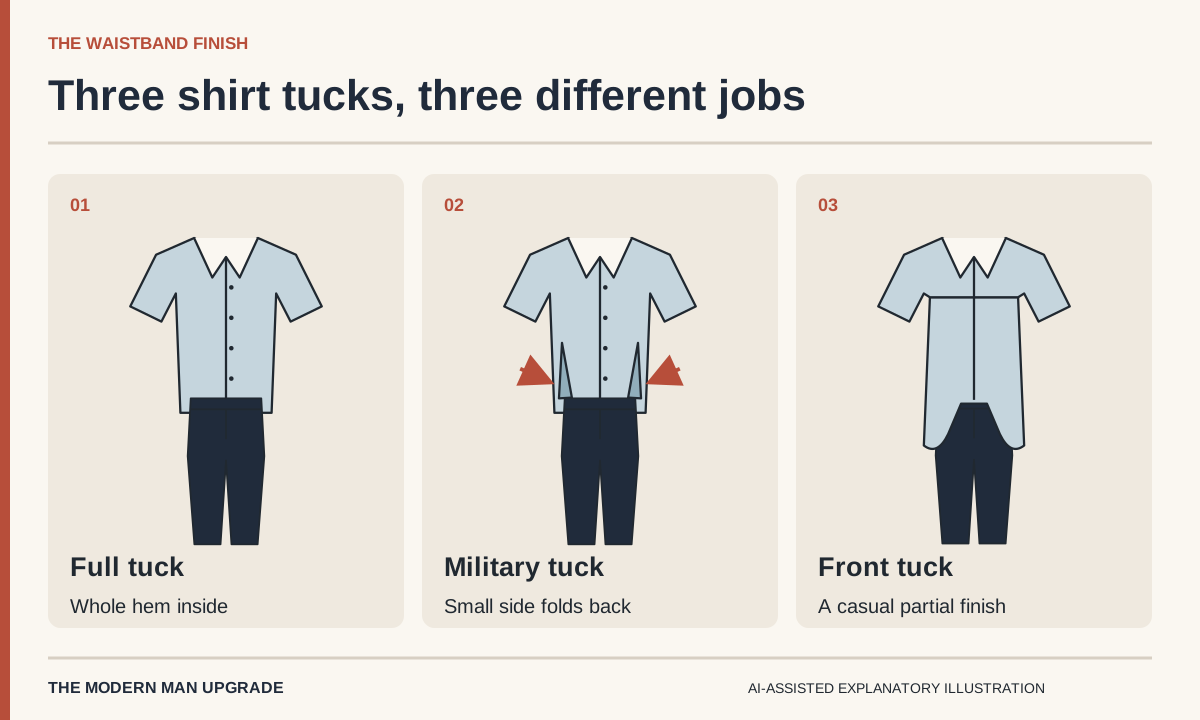
With a suit or traditional dress code, use a full tuck. With casual chinos or jeans, a polo or T-shirt can be tucked or untucked if its length and volume work. Test both from the side as well as the front. If an untucked shirt hides most of the trouser shape, a shorter shirt may be a better solution than a complicated partial tuck.
The business casual guide settles the workplace question. The smart casual guide covers flexible social settings. Match the finish to that setting before experimenting with styling details.
How to do a basic full tuck
This is the first method to learn because it makes fit problems visible without hiding them inside elaborate folds. Use the trousers you actually plan to wear, not a different waistband for practice.
- Put on and button the shirt: smooth the fabric without pulling it tight across the chest.
- Distribute the hem: place it inside the unfastened trousers around the entire waist. Do not leave a bundle at the back.
- Fasten the waistband: it should remain comfortable when sitting. Add a belt if the trousers use one and you want that finish.
- Release movement room: raise and lower your arms, then sit briefly. Let the shirt settle rather than dragging every bit of fabric back down.
- Smooth and align: move excess toward the sides and center the shirt placket over the trouser fly.
Antonio Centeno's tuck guide at Art of Manliness describes the basic tuck, alignment, and the importance of a shirt that fits. Treat these as technique fundamentals. A natural amount of drape is compatible with a neat outfit; you do not need the stretched-flat appearance of a posed catalogue image.
Use a military tuck for a little extra fabric
The military tuck redirects surplus toward small folds at the sides. With the trousers open, pinch the extra fabric near each side seam, fold it toward the back, and hold the folds while fastening the waistband. Keep the fold small enough that it does not create a thick ridge or pull across the buttons.
It is useful for modest excess in an otherwise suitable shirt. If you need to fold a large amount on both sides, or the front buttons strain after folding, stop. The problem may be the garment shape rather than your technique. Use the fit guide to separate length, chest room, and waist volume before considering an alteration.
Do not size down solely to eliminate bunching. A smaller shirt may solve the waist while restricting the shoulders and chest. An appropriate cut, or an alteration discussed with a tailor, is a better way to address that tradeoff.
A front tuck is a different, casual choice
For a casual top, try tucking a small central section into the front waistband while leaving the sides and back outside. Spread the transition softly so the hem does not become a hard lump. A lightweight top is generally easier to manage than a thick sweatshirt or bulky knit.
Judge the result as a silhouette, not as evidence that you have followed a styling rule. A front tuck can reveal the waistband and trouser shape, but it may also leave a long awkward tail behind you. If the half-in, half-out finish feels distracting, use a full tuck or wear the top completely outside. Keep partial tucks out of settings that expect conventional tailoring.
Why does your shirt keep coming untucked?
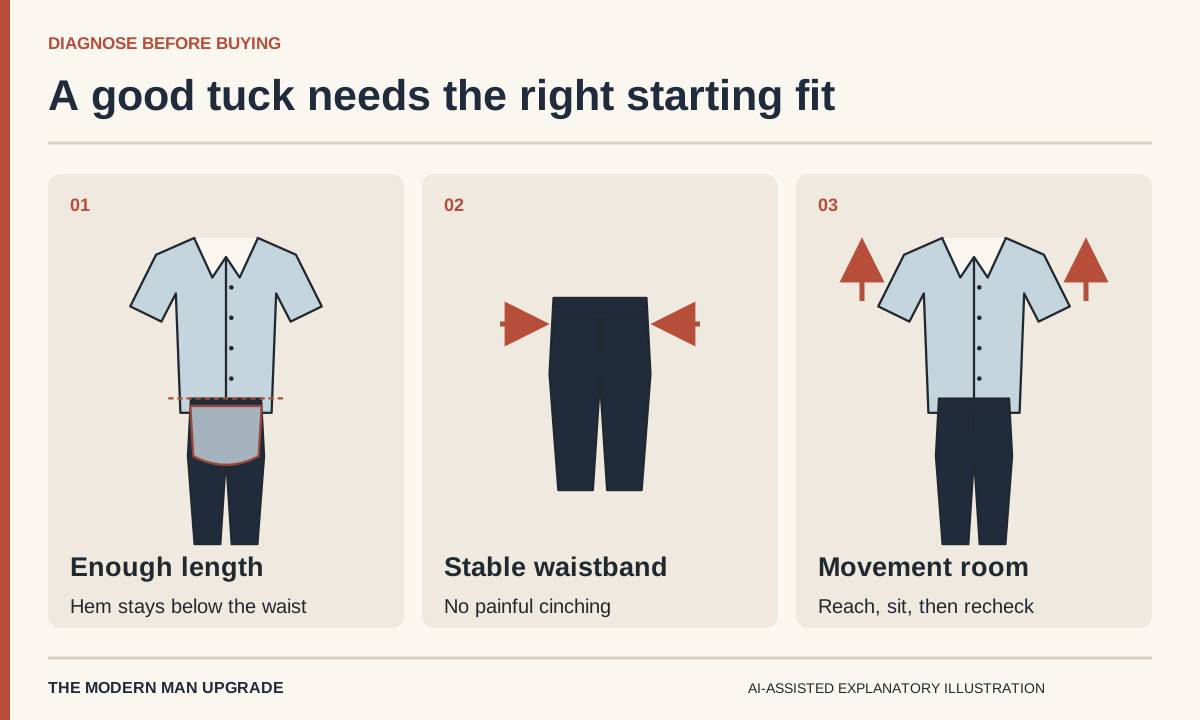
Proper Cloth's fit advice identifies shirt length and bottom width as factors in a slipping tuck. Its measurements are recommendations for its own shirt fitting system; do not treat one number as the correct length for every body and trouser rise.
- The hem escapes when you reach: compare a longer shirt and check whether the shoulders or sleeves pull the body upward.
- Fabric balloons over the waist: start again with the hem distributed evenly, then check torso volume and the waistband position.
- The whole outfit slides: check the trousers. A belt cannot comfortably compensate for a badly fitting waistband.
- It only works while standing: sit and bend before leaving. Keep some movement room instead of repeatedly forcing the fabric taut.
Change one variable at a time. Trying another shirt with the same trousers is a useful comparison; changing the shirt, belt, rise, and tuck together makes the cause harder to identify.
Prepare one outfit you can repeat
Press the shirt first using the shirt ironing guide, then practice the full tuck with your usual trousers. Stand, sit, reach, and walk for a few minutes. Record which combination needs the least adjustment. That is more useful than learning five variations that do not work with your clothes.
If a confirmed fit problem competes with other wardrobe needs, put the alteration or replacement through the Top 3 filter. Buy accessories only after you know what they need to solve.
Shirt tuck questions
Do I need shirt stays?
Not for a basic tuck. They are an optional accessory for situations requiring a very consistent formal finish. Check comfort and fit first; stays do not make an unsuitable shirt longer or more comfortable.
Can I tuck a T-shirt?
Yes, as a casual styling choice. Try it with the actual trousers, smooth excess fabric, and inspect the side view. A full tuck, front tuck, or completely untucked finish can all work depending on length and volume.
Does tucking in a shirt require a belt?
No. Some trousers have side adjusters or a waistband designed to be worn without one. For belt-loop trousers, a simple compatible belt can complete the outfit; see the belt guide.
Source and scope: Art of Manliness and Proper Cloth were checked on September 30, 2026. The movement checks and troubleshooting sequence are editorial guidance, not claims of personal testing or a guarantee that a tuck will stay fixed all day.