Choose a cardigan by its weight, opening and role in the outfit. A fine V-front layer under a coat and a substantial shawl-collar knit worn as the outer piece have different jobs. Try the version you need over the shirt or T-shirt you already wear.
Start with a comfortable base, add the cardigan and compare it open and fastened. Check that buttons do not pull, sleeves do not bunch under the next layer and the hem behaves when you sit. Use the neckline and knit thickness to guide outfits; the bottom button is a styling choice shaped by the garment, not a universal test of good manners.
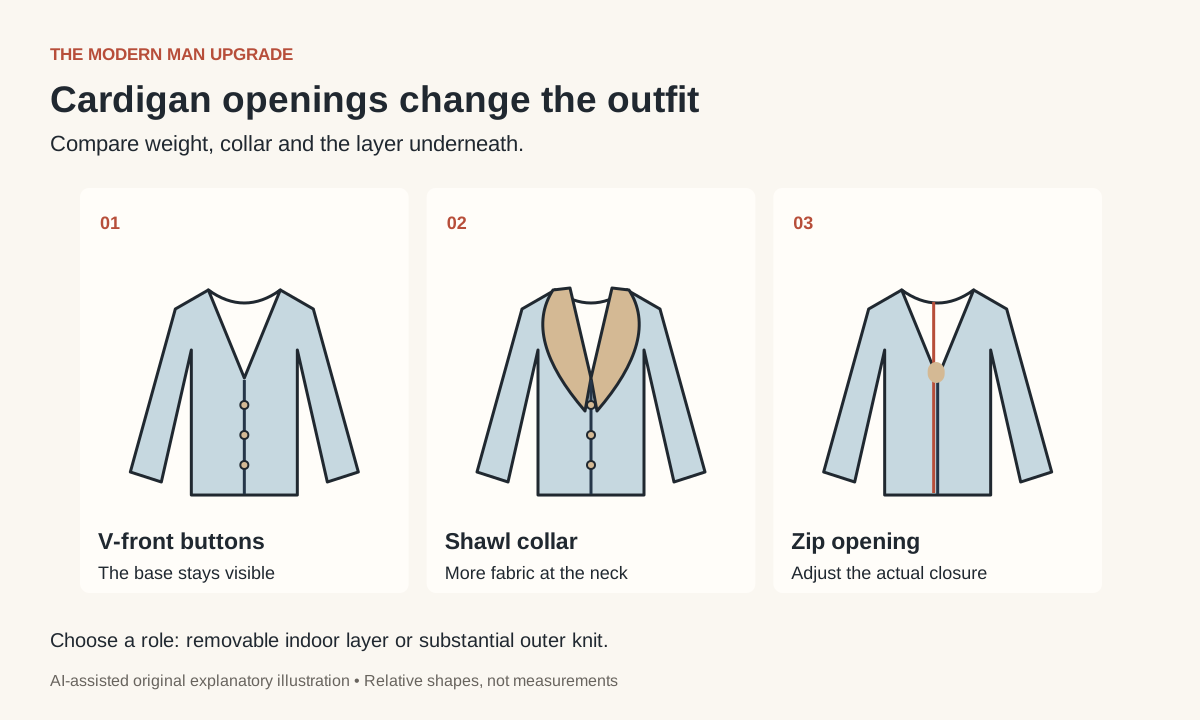
Choose the structure for the role
A fine button-front cardigan can provide a removable layer indoors or beneath a coat. A thicker shawl-collar version creates more bulk around the neck and may be the main outer layer in suitable conditions. A zip opening changes the appearance and the way you adjust it during the day.
Paul James Knitwear’s cardigan overview illustrates several constructions, including buttoned, zipped and substantial knits. Its formality labels are editorial judgments. Use the actual garment and venue to decide whether the outfit is appropriate.
Before comparing styles, decide where you will wear it and what happens when you remove it. If it lives on an office chair, an easy opening and manageable thickness may matter more than an elaborate collar. If it replaces a light jacket, check the pockets, closure and realistic weather limitations.
Fit it over a real base layer
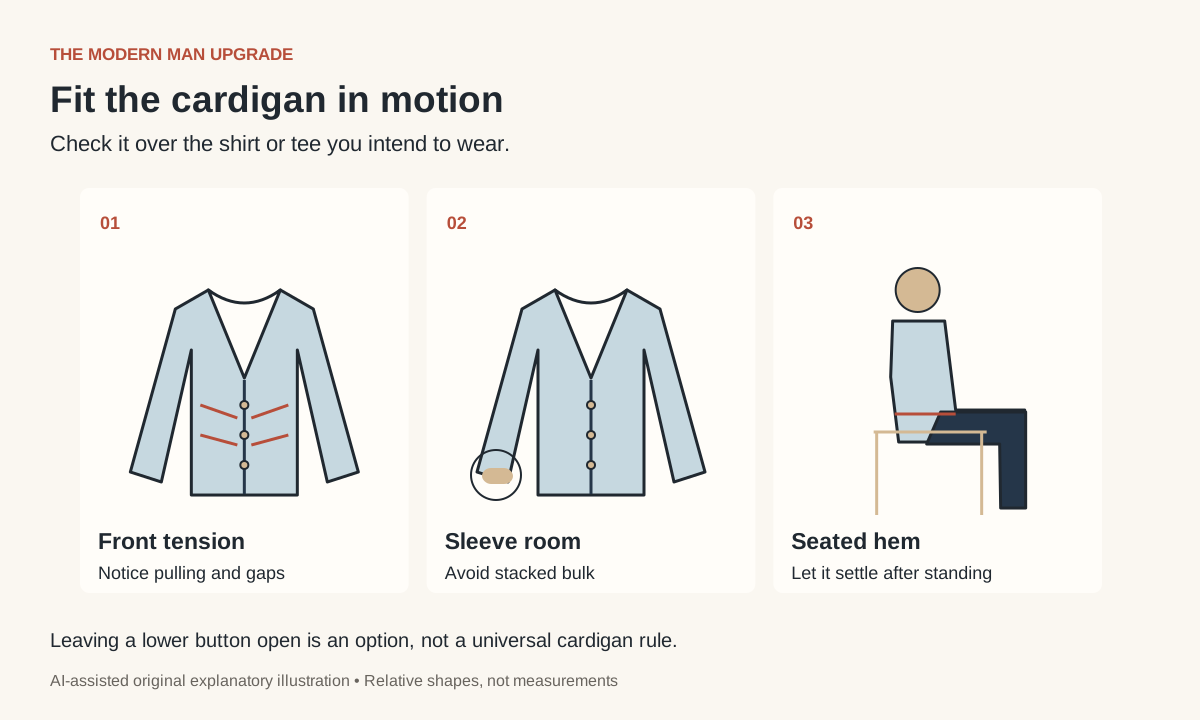
Wear the intended shirt or tee during the fitting. Smooth that layer first, then put on the cardigan. Check for pressure at the upper arms, an awkward collar stack and a body length that interferes with your waistband. Different cuts can be deliberately short, roomy or long; judge the design instead of one mandatory hem position.
- Fasten the buttons you expect to use and stand normally.
- Look for unwanted gaps or pulling along the front.
- Reach for an imaginary shelf and bend both arms.
- Sit, stand and see whether the hem settles acceptably.
- Add your coat if the cardigan needs to fit beneath it.
If the inner shirt repeatedly bunches, assess both layers separately. A heavy sleeve under a close cardigan may be an unsuitable pairing even when both items fit on their own. The clothing fit guide helps distinguish an individual fit issue from a layering mismatch.
Compare open, partly fastened and closed
An open cardigan frames the base layer and makes its condition and neckline more visible. A fastened cardigan creates a different front shape and can show strain that was hidden when open. Try both in the same mirror with the same trousers. Choose the arrangement that feels comfortable and suits the outfit.
Leaving a lower button open may help a particular cardigan move over the waistband. It is an option, not a universal rule imported from a tailored jacket. Some cardigans have different fastening layouts, and a zip design has different adjustment possibilities again. Persistent pulling calls for another size, cut or base layer rather than a ritual about which button is allowed.
Try three useful combinations
Casual and simple: a navy V-front cardigan over an unprinted grey tee with dark jeans. Check that the tee neckline sits how you want when the cardigan is open. The undershirt guide distinguishes deliberately visible tees from layers intended to disappear.
A relaxed workplace: a fine charcoal cardigan over a light shirt, with chinos and suitable shoes. Keep the shirt collar settled instead of adding several competing collars. Check the actual office expectations using the business-casual guide. Knitwear does not override a prescribed jacket or uniform.
A substantial outer knit: a textured shawl-collar cardigan, plain base and straight trousers. Try it with the footwear you own, then assess the overall proportions. If you also need a coat, check the combined collar and sleeve bulk rather than assuming every cardigan is an easy middle layer.
These combinations are starting points for comparison. Photograph an existing option before buying a different color. A cardigan that already works with several real outfits can be more useful than a new style that requires replacing the rest of the wardrobe.
Care for the opening, buttons and knit
Inspect loose buttons and seams before washing. Follow the garment’s directions for fastening, detergent and drying; a cardigan is not automatically machine washable because it resembles another sweater. The wool washing guide covers label-led care for wool versions.
Fold a fully dry knit when appropriate to its construction. Woolmark’s storage guide recommends folding wool garments and checking their condition while stored. Keep substantial items supported rather than forcing a soft shoulder onto a narrow hanger.
When the cardigan starts looking different, diagnose the change. Surface pilling, stretched shape and a loose fastening are separate tasks. A small repair can restore usefulness, while a persistent fit mismatch may justify a different cut. Avoid treating every maintenance issue as evidence that you need another cardigan.
Cardigan questions
Can I wear a cardigan with a polo?
Yes, if the collars and sleeves sit comfortably. Try the two together and remove one layer if the neck area feels crowded.
Does it have to be slim?
No. Relaxed and substantial designs can work. Check movement, the intended silhouette and how the rest of the outfit relates to it.
Can it replace a blazer?
It can serve a different layer in a setting that accepts knitwear. Where a blazer is specifically required, confirm permission rather than assuming equivalence.
The free Top 3 filter can help decide whether adding or repairing this layer solves a repeated wardrobe problem.