Wear a denim jacket by checking its intended cut, the layer beneath it and the trousers you already own. A cropped trucker, a classic-length design and a roomier jacket can all produce different proportions. Start with a simple outfit so you can see what the jacket changes.
Try it over your usual base, fasten it and test reaching and sitting. Judge a cropped or roomy cut as a design choice while checking comfort. For an easy comparison, pair a blue jacket with non-denim trousers; then try denim if you want a tonal or contrasting combination. Neither matched nor mixed denim is automatically wrong.
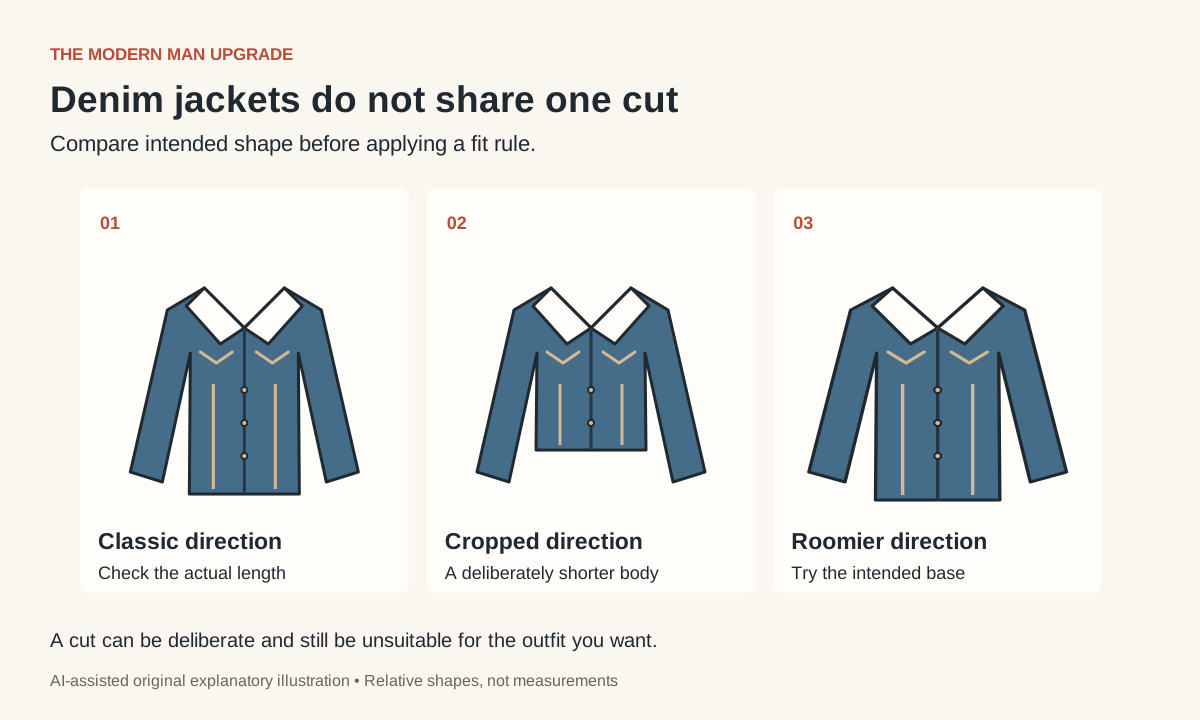
Identify the cut before judging the length
Look at the jacket’s shape and product description. Does it intend a short body, a close classic silhouette or extra room for layers? A label such as trucker describes a family of designs, not one universal set of dimensions. Compare the garment with the shape you want rather than expecting every denim jacket to fit like a blazer.
Levi’s illustrated trucker overview shows distinct silhouettes and design details within its range. That variety is a useful reason to inspect the actual model. Wash, pocket design and a familiar brand name cannot tell you how much sleeve or body room it offers.
If shopping online, compare clearly defined garment dimensions with a jacket you like. Check whether the reference piece uses a similar cut and intended layer. The measurement guide explains how to keep flat garment dimensions separate from body measurements.
Check fit with the layer you will wear
Start with the tee, shirt or knit you expect beneath it. Settle the base properly, then put on the jacket and leave it open. Fasten it for the next check even if you usually wear it open; that can reveal where the design becomes restrictive.
- Stand naturally and check the collar, shoulders and front.
- Reach forward as you would while carrying a bag or opening a door.
- Bend your elbows and notice pressure through the sleeves.
- Sit down, then stand without resetting the entire outfit.
- Compare another cut if useful body room creates unsuitable sleeves or length.
A close cut should still allow the movement you need. Do not rely on a vague promise that uncomfortable pressure will disappear with wear. Denim composition and construction differ. A deliberately dropped shoulder or cropped hem is not itself a fitting error, but it should be a design you actually want.
Inspect the relationship to the waistband and base hem after movement. If an exposed tee hem bothers you, compare a shorter base or another arrangement before blaming the jacket. The general fit guide helps evaluate each garment independently.
Compare contrast with a tonal combination
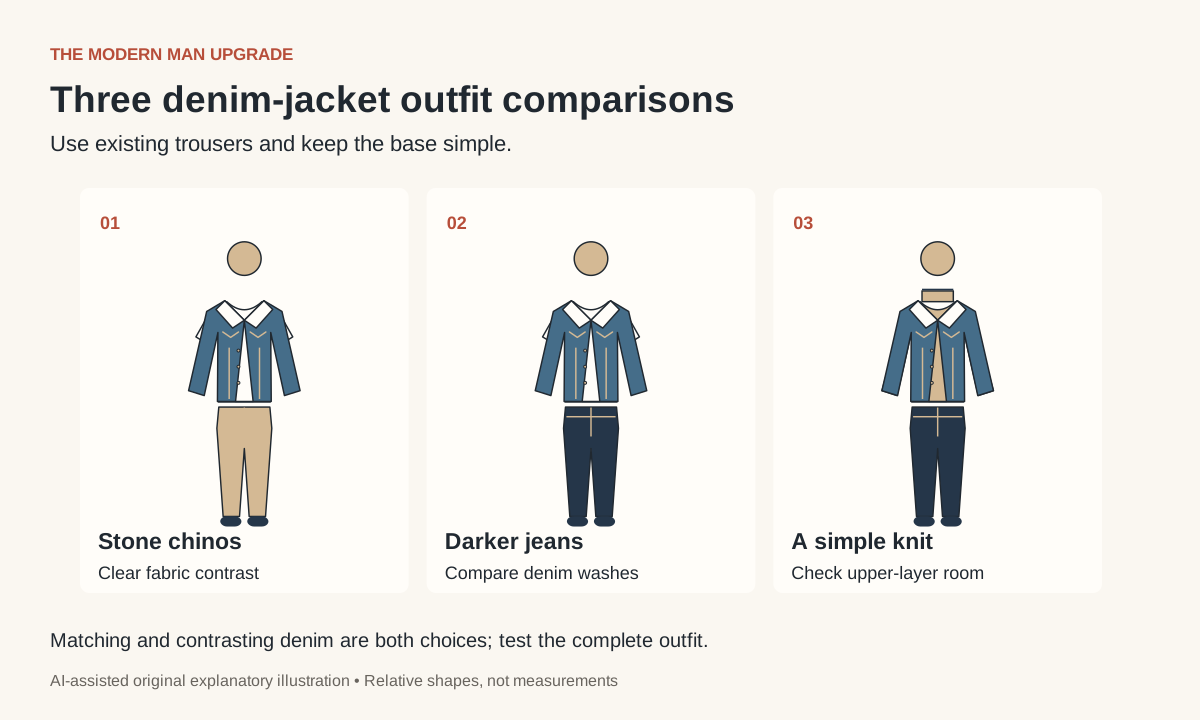
A blue jacket with stone chinos or charcoal trousers is a straightforward first test because the pieces are easy to distinguish. If you want denim below as well, compare different washes or deliberately similar ones. The useful question is whether you like the complete outfit, not whether a universal rule permits two denim pieces.
Wrangler’s denim-jacket styling guide offers manufacturer outfit examples. Treat examples as possibilities rather than a requirement to copy a model’s body, age, accessories or purchases.
Keep your shoes and base layer the same while comparing trousers. Look at the outfit in ordinary light. A changing-room spotlight or a heavily edited photograph can make two washes look more similar or different than they do during normal wear. A simple reference photo can help you compare later.
Try three combinations from your wardrobe
Chinos and a tee: a blue jacket, an unprinted grey tee, stone chinos and casual shoes. Check the two upper hems and the trouser length. This is a low-complexity starting point if the jacket already has prominent seams or pockets.
Different denim washes: a lighter jacket with dark jeans and a simple base. Try the jeans at their normal waistband height and check the whole silhouette. The jeans fit guide covers the seat, rise and leg shape; those choices affect the result as much as wash contrast.
A comfortable knit: a roomier denim jacket over a fine knit with dark trousers. Test sleeve movement and collar space. A heavy sweater may need a different jacket cut; adding it is not a reason to accept restricted shoulders.
Decide where the jacket belongs
A denim jacket can be useful for relaxed settings, but styling it neatly does not establish permission for every office or event. Check the stated dress code. It is also not automatically a substitute for appropriate rain or cold-weather clothing; inspect the actual lining and product specification.
Use the personal-style guide if you are deciding whether denim outerwear fits your routine. Wear-test an existing option in a suitable setting before buying more washes. Note whether you actually use the pockets, like the length and can move comfortably throughout an ordinary day.
Care for this jacket separately from your jeans
Read its label rather than assuming all denim shares a washing method. Lining, trims, stretch fibers and treatments can change the instructions. Inspect dye transfer warnings and keep potentially bleeding denim away from light items as directed. Wash and dry by the approved method, then reassess the fit when fully dry.
Denim-jacket questions
Must a denim jacket be blue?
No. Compare black, ecru or other finishes with the trousers you own. Color does not establish quality or fit.
Can I wear a hoodie underneath?
Yes, if the actual sleeves, shoulders and collar allow it comfortably. Check the hood and jacket neckline together instead of automatically increasing size.
Can older men wear denim jackets?
Yes. Choose by comfort, use and the appearance you want. An age cutoff is not a useful fitting rule.
The free Top 3 filter can help prioritize a useful outer layer alongside the other changes you are considering.