Wear a turtleneck by choosing a neckline you can tolerate comfortably, then matching the knit’s thickness to the rest of the outfit. The useful distinction is often fine versus substantial fabric, because that changes how easily another layer fits over it.
Try the neck before planning the outfit. Check turning, sitting and ordinary movement, then add your intended jacket or coat. A fine knit is a practical starting point beneath tailoring; a heavier knit can be the main visible layer. Treat a roll neck, mock neck and chunky sweater as different options rather than substitutes with identical fit.
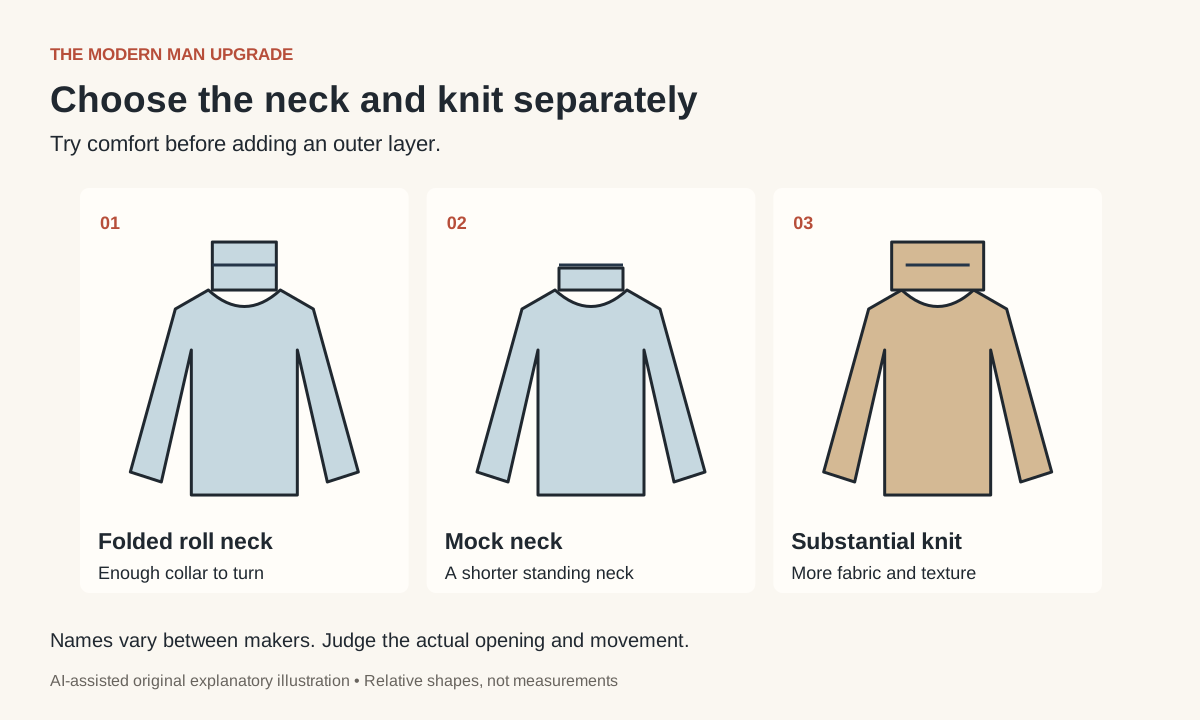
Choose between a folded neck and a mock neck
A traditional roll neck has enough collar fabric to fold back. A mock neck stands higher than a crew neck but usually does not require that full fold. Names vary between shops, so inspect the product and try it on. Neither label tells you how strongly the opening will press against your neck.
Paul James Knitwear’s turtleneck guide distinguishes mock, ribbed and heavier roll-neck options. Those categories are useful; fixed collar heights, body-type prescriptions and claims that one fiber guarantees quality are less helpful for choosing your actual garment.
Start with what feels comfortable against the skin. If you keep pulling the collar away during a fitting, try another opening, fabric or neckline. You do not need to train yourself to tolerate a style that distracts you throughout the day. A mock neck or ordinary crew neck can solve the outfit without that problem.
Check the neck, body and sleeves separately
Settle the collar in its natural shape instead of repeatedly rolling it into a tight band. Turn your head, look down and reach forward. Check whether the neck shifts uncomfortably or the upper body drags with it. Then assess the torso and hem with your trousers at their normal wearing height.
- Stand with your arms relaxed and check the neckline.
- Reach forward and bend your arms to test shoulders and sleeves.
- Sit down and look for unwanted pooling or pulling at the waist.
- Stand again without carefully resetting every part of the sweater.
- Add the intended outer layer and repeat the movements.
A close-fitting fine knit and a relaxed heavier knit can both work. Evaluate whether that design moves comfortably and creates the proportions you want. A fitted appearance should not require obvious strain, and an intentionally roomy cut should not be rejected simply because its shoulder seam sits differently.
Build three outfits from an existing wardrobe
Simple denim outfit: a grey roll neck, dark straight jeans and clean casual shoes. Let the knit be the main visible piece. Compare the hem over the waistband without assuming it must be tucked. Use the jeans fit guide if the lower half feels wrong before changing the sweater.
Chinos and a coat: a navy fine knit, stone chinos and a dark overcoat. Check that the coat closes comfortably and that the collar does not push the knit against your neck. This is a useful test of a real combination rather than a reason to purchase a new coat.
Tailored separates: a dark fine knit, grey trousers and a separate jacket, where the venue accepts it. Compare the jacket fastened and open, and inspect the sleeve area. The smart-casual guide helps interpret the setting; it does not make this a replacement for a required shirt and tie.
These are editorial examples, not a claim that certain colors suit every person. If you already own different neutrals, start there. Keep the lighting and shoes consistent while comparing two options so you are assessing the knit rather than changing the whole outfit at once.
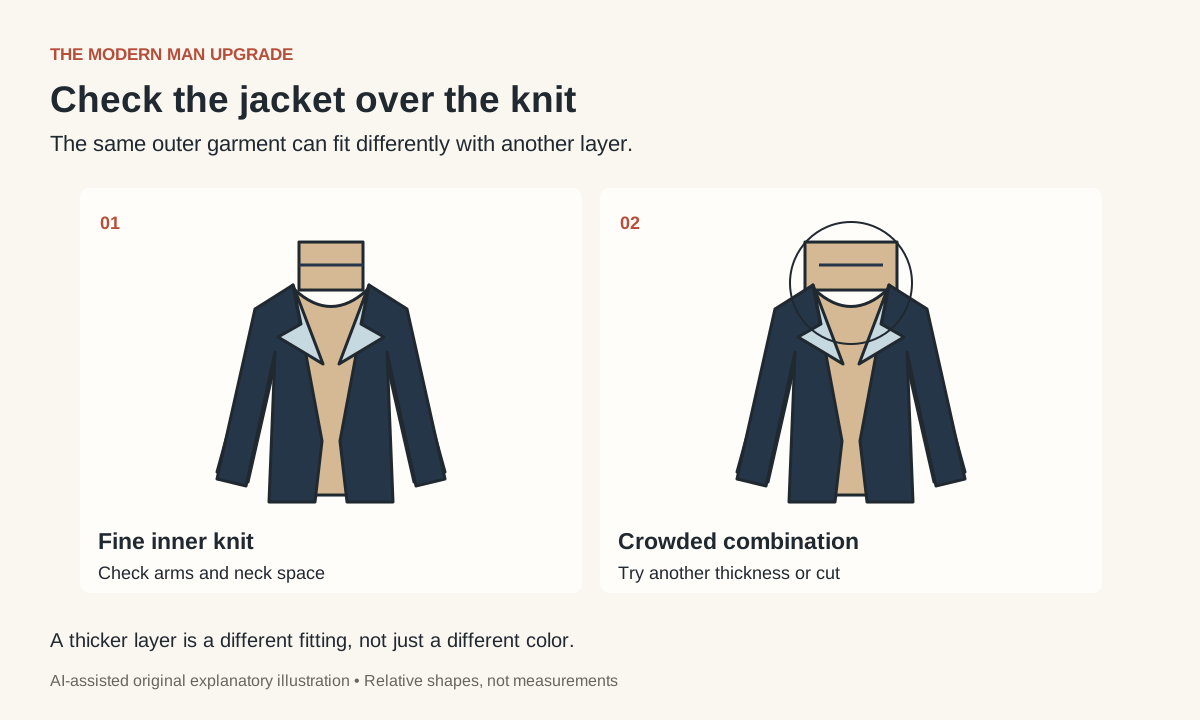
Check the thickness beneath the jacket
A sweater that works alone may be too substantial for a particular jacket. Notice the upper arms, armholes and collar area. If the jacket no longer settles properly, first compare a finer inner layer. Automatically increasing the jacket size can create other fit problems without solving the intended combination.
Try the outdoor and indoor versions. Remove the coat and see whether you like the remaining outfit; add it again and check movement. The layering guide offers the broader planning method. Here the specific question is whether this high neckline and knit thickness fit beneath this outer garment.
Care for the shape you chose
Read the garment label for washing and drying. A fiber name does not identify the treatment or every trim on the finished item. Support wet knitwear and use the permitted drying method; Woolmark’s sweater drying guidance is a useful reference for wool, with label-specific exceptions preserved.
Do not pull a damp collar into a new shape to force a different fit. Keep a dry reference photo if you want to compare the garment after care. The wool sweater guide gives the full washing and supported-drying routine.
Turtleneck questions
Can I wear a T-shirt underneath?
Yes, if it improves comfort without unwanted edges or bulk. Try the complete combination, including the outer jacket. The base layer should solve a real need.
Can a turtleneck replace a shirt at a formal event?
Only when the event’s expectations allow it. Check the invitation or organizer rather than treating a styling photograph as permission.
Should a turtleneck always be tucked in?
No. Test the thickness, length and waistband together. If tucking creates a bulky ridge, compare an untucked arrangement or a more suitable knit.
Use the free Top 3 filter to prioritize a knitwear change only when it makes an outfit more usable in your ordinary week.